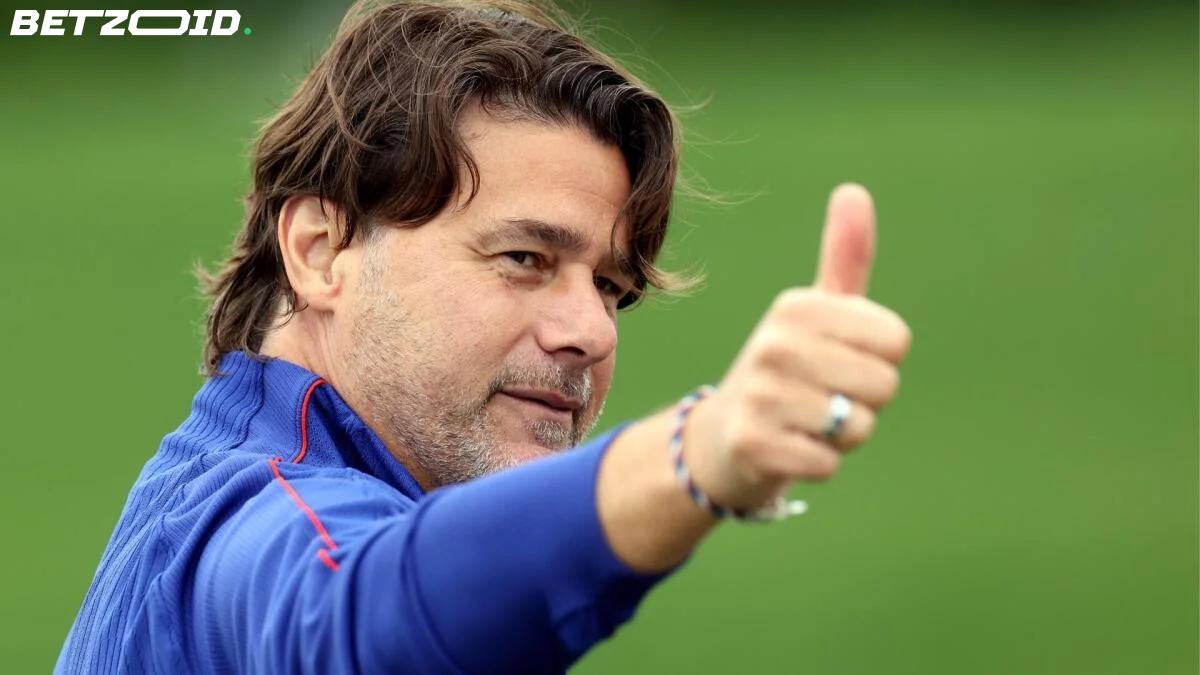
Mauricio Pochettino is staying with the USMNT. Negotiations with U.S. Soccer are trending toward a deal that runs through the 2030 World Cup, with an announcement expected before September friendlies — which have yet to be scheduled.
The deal isn't signed yet, per The Athletic, but the direction is clear. Broadcaster Andres Cantor reports that talks are progressing well, and the federation wants Pochettino locked in before the team's first post-tournament matches this fall.
What the World Cup actually showed
Pochettino took over in September 2024 with less than a year to build something coherent. By most measures, he did. The U.S. captivated the country — over 50 million viewers tuned into their round-of-16 exit against Belgium, a 4-1 defeat that ended a fourth consecutive World Cup run at that stage. The result stings, but the audience numbers tell you something about how invested people had become.
His own assessment after elimination was honest rather than defensive: "One year ago, we thought that we were in a mess. Thinking today in the way that we performed in that World Cup, I say we improved a lot." That's not spin. It's a reasonable read on a team that was genuinely competitive for stretches of the tournament.
AC Milan came sniffing before the World Cup but ultimately turned to Ruben Amorim. That decision cleared the path for this extension — and for USMNT backers, it's the right outcome. Continuity matters in international football, and Pochettino is only now getting to the part of the job he's built for: a full four-year cycle with proper qualification campaigns and time to embed his attacking system.
The road to 2030
The next cycle is loaded with markers beyond just qualification. The U.S. is expected to compete at the 2028 Los Angeles Olympics — a U-23 tournament that U.S. Soccer is treating as a genuine development runway — and likely the Copa America that same summer. Pochettino was reportedly involved in hiring Steve Cherundolo to lead the Olympic program, which signals he's already thinking about pipeline, not just the senior squad.
That kind of long-term planning has direct consequences for the talent pool available in 2030. The young players who impress at the Olympics will be pushing for senior spots just as the World Cup cycle heats up. If Pochettino uses those years to actually synchronize the two programs, the USMNT could arrive at 2030 with genuine depth rather than a roster built around a handful of established names.
"A process is about four years," he said after the Belgium loss. "Today I think we closed the chapter about assessing players." The assessment phase is over. Now comes the build.