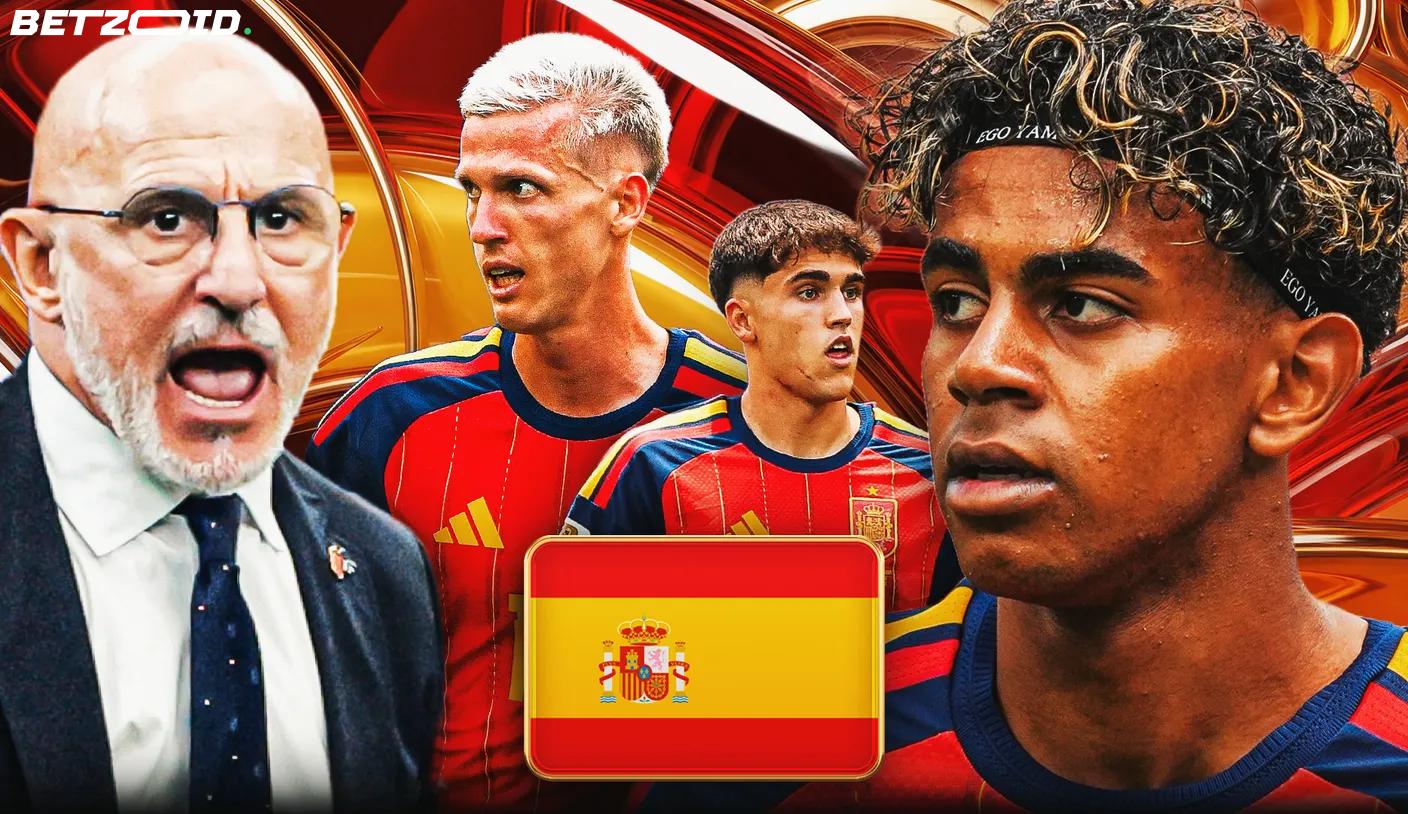
"If I speak about Spain, I don't speak about one star," Zlatan Ibrahimović said after Spain dismantled France 2-0 in the semifinal. "The team is the star." Seven games into this World Cup, Spain have conceded exactly one goal. That quote isn't poetry. It's a scouting report.
On Sunday, that team meets Lionel Messi and Argentina in the final — a genuine clash of football philosophies. Argentina are built around the greatest player the sport has ever seen. Spain are built around something almost impossible to dismantle: a shared idea.
Luis de la Fuente didn't invent the system — he inherited and evolved it
Spain's golden era under Luis Aragonés and Vicente del Bosque produced three major trophies between 2008 and 2012 — Euros twice, World Cup once — on the back of tiki-taka and a generation that included Iniesta, Villa, Torres, and Xavi. Then that generation aged out, and Spain went three straight World Cups without winning a knockout game.
Rather than blow it up, Spain promoted from within. De la Fuente had been coaching Spain's youth teams since 2013 — winning the U-19 Euros, then the U-21 Euros, then taking the U-23 side to the Olympic final in Tokyo before losing to Brazil. He knew which players were coming and, crucially, they already knew his system before they ever pulled on a senior shirt.
His tactical tweak was subtle but significant. He kept the high tempo and quick passing that defines Spanish football, but made it more direct — get the ball into the attacking third faster, create central overloads, and use that to free up wingers in one-on-one situations. On the other end, rigid defensive shape and an immediate press to win possession back. It's not reinvention. It's refinement.
What made it work at the World Cup is that de la Fuente wasn't working in isolation. Santi Denia, his successor with the U-21 and Olympic teams, ran the same system. In the summer of 2024, while de la Fuente won Euro 2024 with the senior side — beating Italy, Croatia, Germany, France, and England across seven games — Denia won Olympic gold, beating France in the final. Two different squads. Same identity. Same results.
No Real Madrid players, no problem — apparently
When de la Fuente named his World Cup roster without a single Real Madrid player, it caused genuine uproar in Spain. Eight Barcelona players made the cut. Zero from the most decorated club in the world. De la Fuente called the squad "perfect" and refused to blink.
Seven games in, it's hard to argue with him. Spain have not lost. They've conceded once — a goal in a 2-1 win over Belgium in the quarterfinal. Their only dropped points were a 0-0 draw against Cape Verde. Lamine Yamal, 18 years old and recently a Ballon d'Or finalist, is their most visible individual talent, but even he functions within the structure rather than above it. Five players from the Olympic gold medal team are on this World Cup roster, including Pau Cubarsí and Álex Baena. A sixth, Fermín López, would have been here too if not for a broken foot.
"Spain never used to win like that, and now they win at every level," Thierry Henry said after the semifinal — a man who knows the sting firsthand, having lost the Olympic final to Denia's U-23 side as France's coach.
Against Argentina, Spain's defensive odds look as solid as they've been all tournament. Messi has eight goals and four assists in this World Cup alone. He is the all-time leading scorer in World Cup history with 21. The system that's conceded once in seven games is about to face its hardest test.
"The best players aren't just at Real Madrid, Barcelona, or Atlético," de la Fuente said before the tournament. "We pick the ones we believe best fit our system."
That system now has 90 minutes — maybe more — to prove it can stop the greatest player on the planet.