The 2026 World Cup has a goalkeeper problem — if you're Spain, Uruguay, or Ecuador, that is. A handful of keepers from countries most casual fans couldn't find on a map have been making the tournament's biggest names look ordinary. And the stories behind those saves are even wilder than the results.
Beiranvand: From sleeping rough to Guinness records
Alireza Beiranvand is the man who did what nobody had done before him — saved a Cristiano Ronaldo penalty at a World Cup. That was 2018. Nobody's done it since. But that's almost a footnote in his biography.
Born in 1992 into a nomadic Kurdish tribe in Iran, Beiranvand was shepherding sheep by age three. He moved to Tehran in his teens to chase football, and the city nearly broke him. He was homeless. He cleaned SUVs at a car wash — specifically hired for that job because of his six-foot-four frame — worked in a factory, delivered pizzas, swept streets. Whatever it took to stay in Tehran and keep training.
He signed his first professional contract in 2011. Seven Iranian league titles followed, six with Persepolis and one with current club Tractor. He also holds two Guinness World Records: longest throw at 61 metres, longest dropkick at 78 metres. At 33, he's still playing at the World Cup. That's the full arc.
Room and Vozinha: The two clean sheets nobody saw coming
Eloy Room was clubless when qualification began. Cercle Brugge released him in 2025, and no contract came. So the 37-year-old — who plays his club football for Miami FC in the USL — trained alone with a personal trainer and a goalkeeper coach, holding himself together with one specific goal in mind.
"If I have a goal for myself, then I really give my all for it," he said. The goal was the World Cup. He got there, and then made 15 saves to hold Ecuador to a 0-0 draw — the most saves in a World Cup game that didn't go to extra time. A record, in a game Curacao was supposed to lose comfortably. For context, Curacao is the smallest country ever to appear at a World Cup.
Room was born in the Netherlands but chose to represent the island nation his roots come from. He'd done something similar before — 13 saves to blank Honduras at the 2019 Gold Cup, Curacao's first-ever tournament win. The reflexes he sharpens by playing padel in his spare time are apparently doing the job.
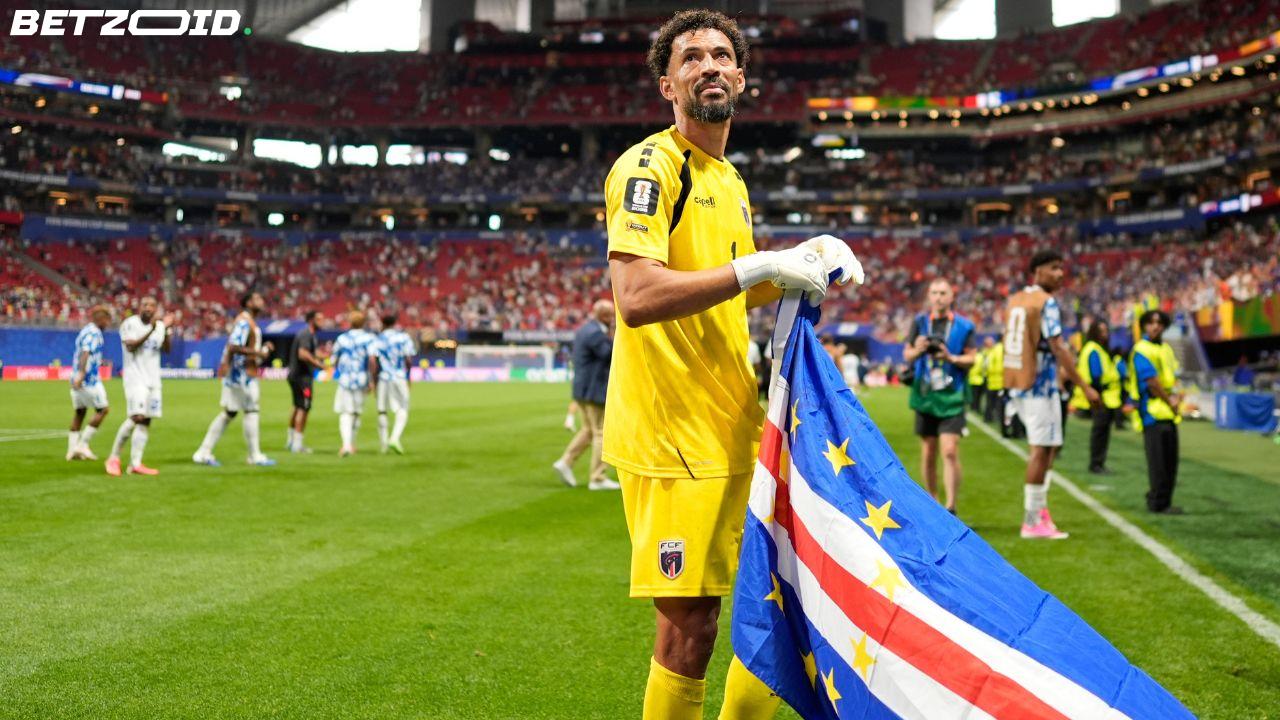
Then there's Vozinha. Real name Josimar Jose Evora Dias, nicknamed "granny" in Creole since childhood, now 40 years old and somehow the most-followed goalkeeper in Cape Verde history — 50,000 Instagram followers before the Spain game, 15.6 million after a 0-0 draw that stunned everyone watching. Seven saves. Spain, blanked.
He didn't go professional until his mid-20s. He nearly retired from international football in 2025 after losing his starting spot to the younger Bruno Varela. His teammates talked him out of it. Varela's form dipped, Vozinha got his shirt back, and now he has this.
"We work in life to have moments like this," he said. "I am 40 now, but I was not a professional until I was 25. This is a reward for all this journey."
Hard to argue with that.
Luca Zidane: Making his own path under the most famous surname in football
Luca Zidane grew up at Valdebebas, Real Madrid's training complex, watching his father manage Cristiano Ronaldo, Luka Modric, and Karim Benzema. He trained with the senior squad. He played for the B team. He briefly appeared for the first team. And then he had to be honest with himself about his ceiling.
"When you're called Zidane, everything you do has more of an impact," the 28-year-old said. "People are waiting for something bad to happen." He's lived with that since childhood. Now he plays for Granada in Spain's second division and carries eight caps for Algeria — the country his paternal grandparents are from — into a World Cup.
He chose Algeria himself. The family — including Zinedine — supported it. Being raised in a household steeped in Algerian culture made the decision feel natural. Playing a World Cup makes it feel right.
"At the start, people see you more as someone's son," he said. "But I've always tried to make my own path."
At this World Cup, four goalkeepers are doing exactly that — and three of them have already made clean sheets against teams that were supposed to run through them.