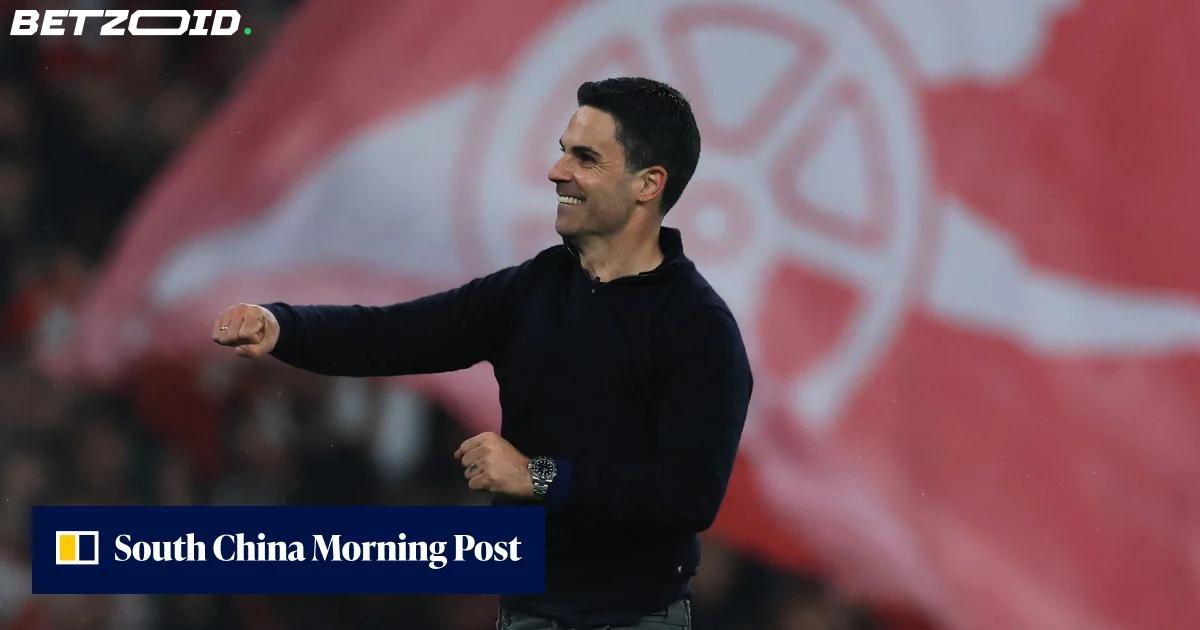
Four of the five nominees for the Johan Cruyff Trophy — the Ballon d'Or's men's coach of the year award — are Spanish. That's not a fluke. It's the logical endpoint of two decades of deliberate, systematic work.
Monday's ceremony in London will put Spain's coaching dominance on full display. Luis Enrique, gunning for a second consecutive Cruyff Award after winning back-to-back Champions League titles with PSG, is the frontrunner. Luis de la Fuente is right behind him, having delivered Spain's World Cup title this summer. Then there's Mikel Arteta, whose Arsenal side are defending Premier League champions, and Unai Emery, who won the Europa League with Aston Villa. The fifth nominee is the only non-Spaniard in the conversation — and even that feels like a token gesture at this point.
Where It Comes From
The root is Johan Cruyff. When the Dutch great arrived at Barcelona in the 1970s and returned as coach in 1988, he planted a philosophy — possession, movement, constant repositioning — that would take decades to fully bloom. Luis Aragones turned it into a national identity, building Spain's golden generation around Xavi and Iniesta, winning Euro 2008, the 2010 World Cup, and Euro 2012.
But Spain's real advantage isn't the players. It's how they train the coaches.
"The cornerstone to the high esteem that Spanish coaches are enjoying now is their training and, above all, their ability to adapt," said Ivan Cancela, who runs the Spanish football federation's coaching academy. Both Guardiola and Luis Enrique are graduates. De la Fuente taught courses there. This isn't coincidence — it's infrastructure.
The famous "rondo" drill — piggy in the middle, compact space, one-touch passing under pressure — underpins everything. "You used to see lots of drills in training that were not using the ball," said Javier Cano, president of Spanish coaches' association EFA Pro. "In Spain the drills are all based on situations you can see in a real game." That edge has compounded over 20 years.
The Numbers Behind the Dominance
Spaniards now make up the largest nationality group of Premier League managers — five clubs. UEFA data shows 107 Spanish coaches working in first and second divisions abroad last season, up from 99 the year before. Portugal is second with 88. More than a dozen national teams are now managed by Spaniards, including the Netherlands, Qatar, Czech Republic, and South Korea.
It was Rafael Benitez's move to Liverpool from Valencia in 2004 that cracked the door open. Now it's a motorway.
One of the stranger footnotes in all this: a disproportionate number of elite Spanish coaches come specifically from the Basque Country. De la Fuente, Emery, Lopetegui, Mendilibar — all from the region. And Arteta, Xabi Alonso, and Liverpool's Andoni Iraola all played together as boys at Antiguoko, an amateur club in San Sebastian.
"We were lucky that these three great people and players coincided at our club," said Antiguoko vice-president Roberto Montiel. "Then there is the DNA of Antiguoko and the Basque society — we are all super competitive and share the passion for football."
De la Fuente also modernised the system itself — out went the slow tiki-taka that stalled after Xavi and Iniesta retired, in came faster transitions and direct wide threats like Lamine Yamal and Nico Williams. Spain didn't just recycle a formula. They updated it and won a World Cup with the new version.
On the women's side, Barcelona's Pere Romeu and OL Lyonnes coach Jonatan Giraldez — also Spanish, also former Barcelona — are both nominated for the women's coaching award after meeting in the Women's Champions League final in May. Barcelona won 4-0. Spain's grip on football's coaching market isn't loosening anytime soon.