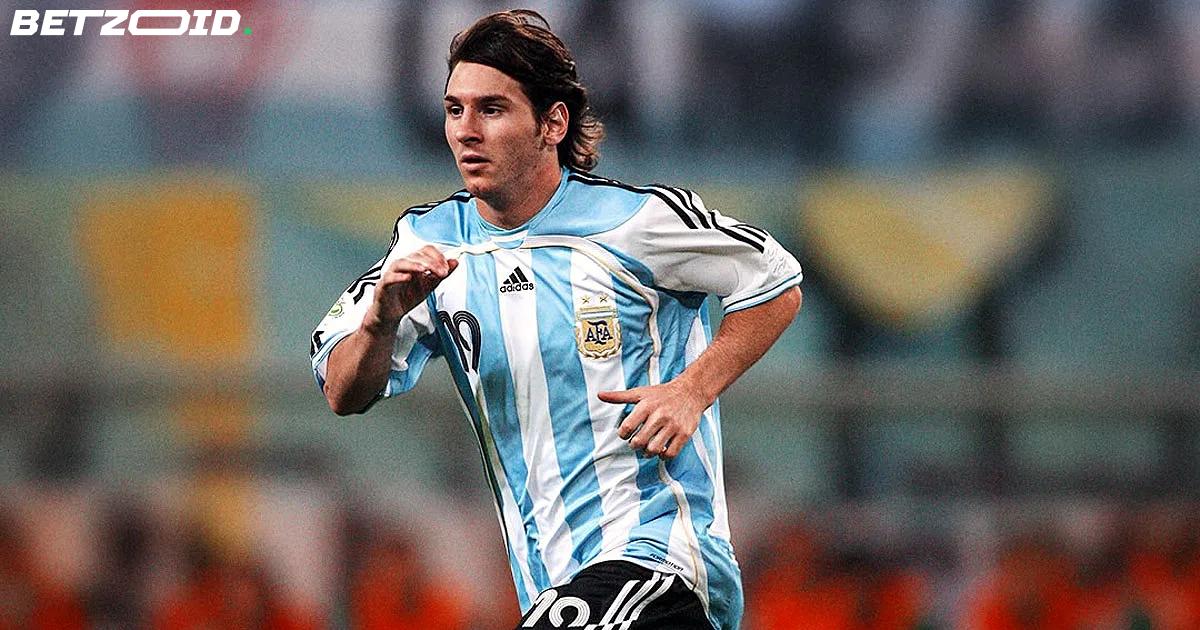
"Every minute was important, because I had no doubt that over the next 10 years he would be fighting to be one of the best players in the world." Jose Pekerman said that about an 18-year-old kid he sent on with Argentina already 4-0 up. Twenty years later, it reads less like faith and more like prophecy.
June 2006, Gelsenkirchen. Argentina were dismantling Serbia and Montenegro. The match was done. Pekerman brought on Messi anyway — not for the scoreline, but for the experience. Within minutes, the teenager set up Hernan Crespo, then scored himself to complete a 6-0 rout and become the youngest Argentine ever to score at a World Cup.
A plan that looked like a gamble
Argentina fans were not satisfied. Messi started only once in that tournament — a 0-0 draw with the Netherlands — and sat on the bench as Germany knocked them out in a quarter-final penalty shootout. "Argentina blow it with crazy substitutions," the Guardian wrote. The International Herald Tribune ran a headline asking why Messi sat out at all.
Pekerman still defends it. His argument was never about 2006 — it was about the decade that followed. He told Messi before the tournament: "I can't tell you that you're going to play many minutes. The team already has an organisation. You're going to bring a lot to the side, but only in the minutes I can give you." Blunt. Honest. Turns out, correct.
What's easy to forget is that Messi had spent most of his youth career in Spain. He wasn't fully embedded in the Argentine national setup yet. Pekerman saw a teenager who needed gradual immersion, not a starring role on football's largest stage before he was ready for its weight.
What 20 years actually looks like
Messi, now 39, has played six World Cups. Thirty matches. Twenty goals — more than any player in tournament history. He's Argentina's oldest World Cup scorer too, bookending that record he set as the youngest. He won the whole thing in 2022.
Pekerman, 76, coached Colombia to the 2014 and 2018 tournaments after leaving Argentina. He grew up watching Maradona's early days at Argentinos Juniors. When Messi appeared at Barcelona, he recognised the signs immediately. "It was the same that had happened with Maradona. Something that went beyond his age."
The records are staggering on paper, but Pekerman lands on something more specific when asked what stands out most. "The records he is setting will be very difficult to break. It isn't easy to stay at that level for so long, always finding new goals to achieve. And he has done it without losing his essence as a person."
A shy kid who turned 19 during that Germany tournament, celebrating with veterans Roberto Ayala and Pablo Aimar — both now assistants under Lionel Scaloni. The same person, two decades on, just with six World Cups behind him instead of none.