"It's very high stakes and no room for error, and we definitely do not want to have any kind of fail." Bert Bos isn't talking about a penalty shootout. He's a sod farmer from Abbotsford, British Columbia, and he's responsible for the grass at Vancouver's World Cup stadium — seven matches, starting June 13.
When billions of people watch the 2026 World Cup across 16 venues in Mexico, the United States and Canada, most will never once think about the surface underfoot. That's exactly the point.
Not all grass is the same
The science involved is genuinely complex. Leah Brilman has a PhD in grass science and has been working on World Cup pitches since South Africa 2010. Her employer, global seed company DLF, is supplying ryegrass blends for Vancouver and Mexico City — temperate climates where cool-condition grasses thrive. Hotter host cities are getting bermudagrass-based blends instead. One grass variety does not fit all.
The specific strains being used are the product of decades of breeding — each generation tougher, more disease-resistant, less thirsty than the last. "Every generation we improve on what we have," said Brilman. The grass used at previous World Cups is essentially obsolete now.
FIFA has invested millions in soccer-specific turf development. The standards are unforgiving: across a three-metre length, height variation can only be five millimetres. A mechanical "fake foot" simulates a fast-turning footballer during testing. The area in front of goal — where the surface always takes the worst punishment — gets constant reseeding throughout a tournament.
A tiny industry with an enormous job
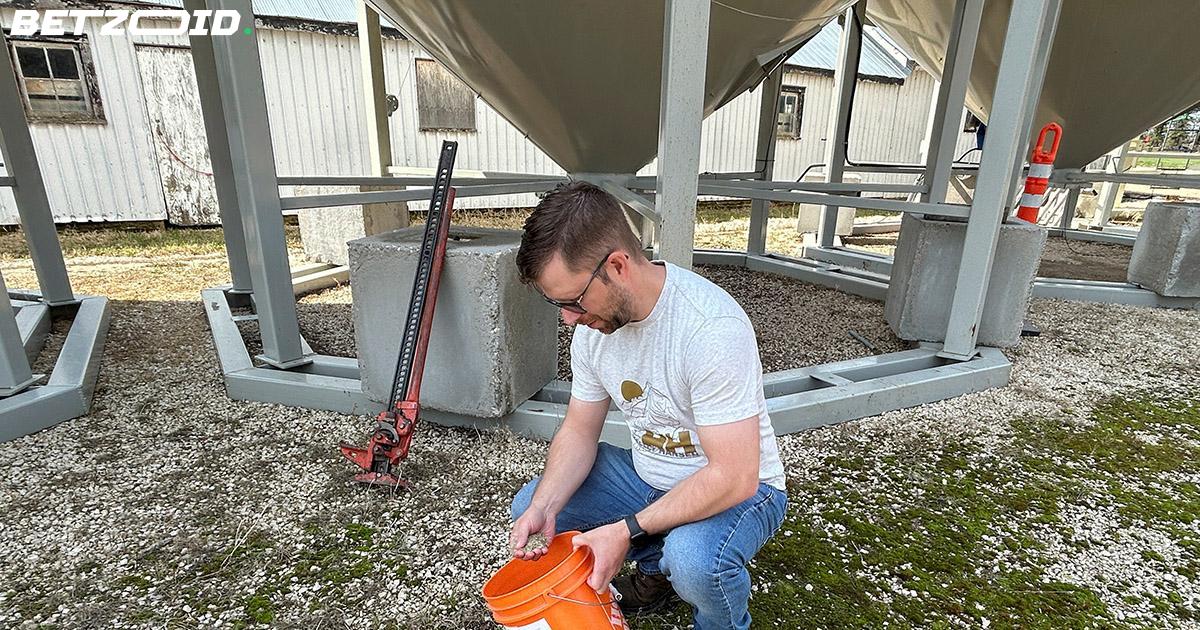
Grass seed farming is a niche world. Lorne Boundy farms near Arborg, Manitoba, just south of the tree line — and seed from his community is heading to World Cup pitches. There are only a few hundred farmers in his entire province doing this work. Most of their output ends up on golf courses, parks and suburban lawns. The World Cup allocation is a small slice of a small industry.
After harvest, the seed moves through a commercial cleaning, bagging and distribution chain before reaching sod growers like Bos, who grows his Vancouver pitch atop plastic with sideways-rooting grass rising through a netlike fabric — a system developed in Australia.
The benchmark everyone is working against is the February 2023 Super Bowl, when the playing surface turned into a slip-and-slide and became an embarrassment permanently attached to that game's legacy. Nobody in the grass business wants to be responsible for the equivalent at a World Cup.
Tom Rinn, who manages DLF's processing and distribution, has a simpler ambition: "Sitting around, watching a game, having a cold one with the buddies, and being able to say — that's our grass, that one right there, that came through here."
If the pitches hold up, nobody will say a word about them. That's how you know the job was done right.