"What makes me proud is who Leo is as a person." Jorge Messi said that, and it tells you more about how Lionel was raised than any trophy cabinet ever could.
Lionel Andrés Messi was born on June 24, 1987, in Rosario, Argentina, to a steel plant worker and a part-time factory cleaner. Jorge worked long shifts at Acindar, a steel manufacturing company. Celia Cuccittini cleaned homes and raised four children — Rodrigo, Matías, María Sol, and Lionel. Neither parent had football careers of their own. What they had was a kid who couldn't stop playing.
A diagnosis that changed everything
When Messi was ten, doctors identified a growth hormone deficiency requiring expensive monthly treatment. Newell's Old Boys, his local club at the time, couldn't cover the costs. Neither could the family on their own. That medical reality is what pushed them toward Barcelona — not ambition, not chasing glory, but necessity.
FC Barcelona agreed to support his treatment. The family relocated to Spain, though the transition fractured them almost immediately. Jorge once recalled that in those early years, "Leo saw his mother only every four months." Messi later admitted, "There were moments when I was really sad and homesick, but I never thought of leaving."
That's worth sitting with. A child, far from home, injecting growth hormones, training in a foreign country — and he never asked to come back.
The bond that never broke
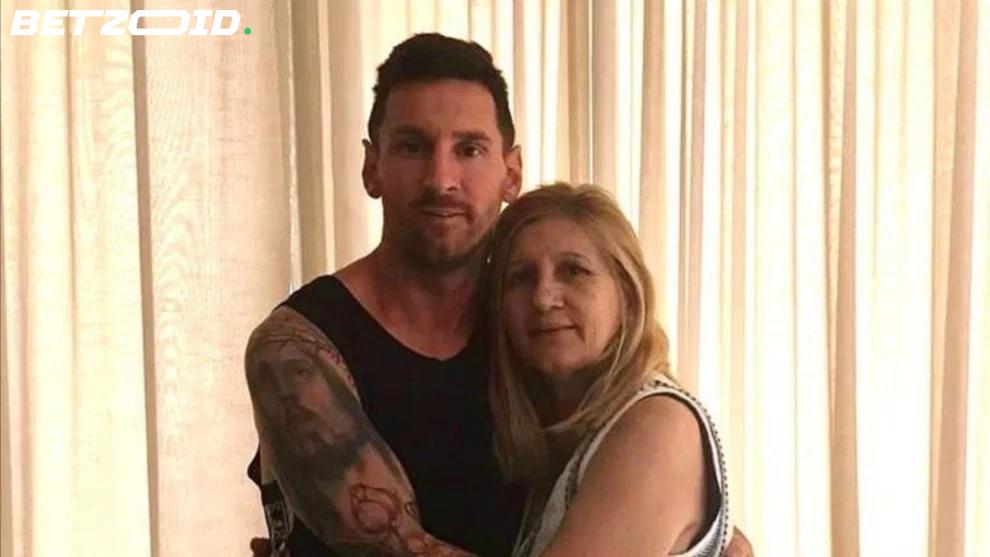
Messi has a tattoo of his mother's face on his left shoulder blade. Celia appeared on Argentine television in 2018 and pushed back on critics who claimed her son didn't care about the national team: "When people say that he doesn't feel it or that he plays out of obligation, that hurts as a mother and as a family."
She was there in Qatar when Argentina won the 2022 World Cup. So was Jorge. After everything — the hormones, the homesickness, the years split between continents — they watched their son lift the one trophy that had eluded him his entire career.
Both parents carry Italian ancestry, a common thread through Rosario's history of European immigration. They met as young adults in the Las Heras neighbourhood, married in 1978 after Jorge completed his military service, and built a modest life that happened to produce the most decorated footballer the sport has ever seen.
Jorge put it simply: "His success elsewhere is a consequence of who he is."