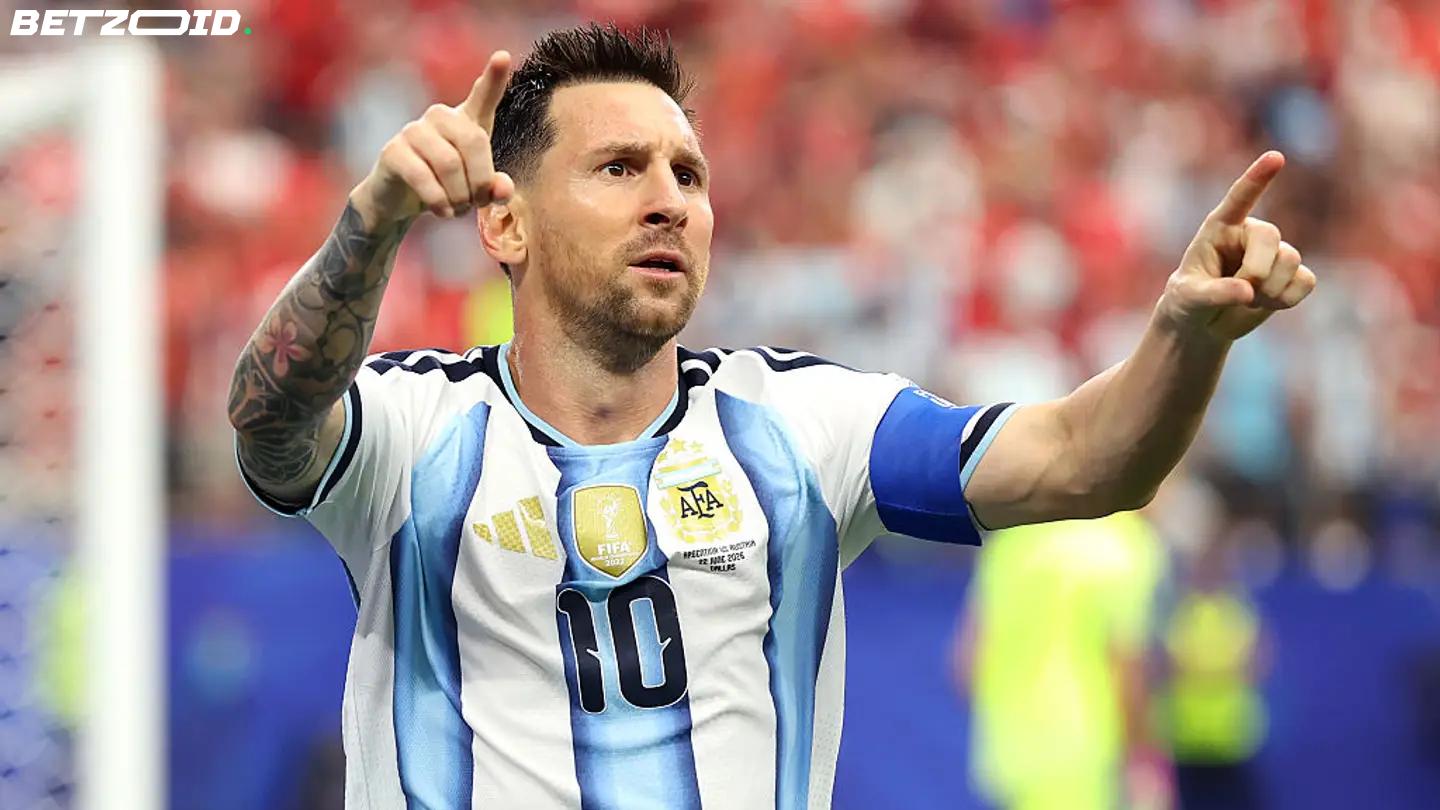
"Finally, you are going to call him up. My son wants to play for the Argentine national team." That's what Jorge Messi said when Argentina's football federation finally tracked him down — through a phone directory, a grandmother, and an uncle — to secure the greatest player the sport has ever seen.
It was nearly not the case. Spain had Lionel Messi in their sights, and for a stretch in the early 2000s, Argentina wasn't even looking.
How Argentina almost missed him entirely
Messi left Rosario at 13 to join Barcelona's La Masia academy. His mother, brothers and sister eventually returned to Argentina. He stayed, living with his father near Camp Nou, grinding through homesickness and growth hormone therapy while becoming the centrepiece of what La Masia called their 'Baby Dream Team.' Out of sight, largely out of mind for the Argentine football federation.
Spain noticed first. At the 2003 U-20 World Cup — when Messi was 16 and not even in Argentina's squad — a member of Spain's technical staff pulled aside Argentine officials and asked them directly: "How come you didn't bring the kid from Barcelona? He is much better than everyone here." That tip-off, relayed by long-serving AFA official Omar Souto, is what set the chain of events in motion.
Souto went home, pulled a Rosario phone directory, and started cold-calling families named Messi. He reached the grandmother. The grandmother gave him the uncle. The uncle gave him the father. And the father told him his son had always wanted to play for Argentina.
Former Argentina manager José Pékerman added another layer in a 2025 interview, claiming Spain had literally prepared paperwork to field Messi at the U-20 World Cup. His counter-move was surgical: get Messi into a friendly, get his signature on the team sheet, send it to FIFA. Lock it in before Spain could.
The path Messi chose — and what it cost him
By mid-2004, Messi had debuted for Argentina's U-20 side. In 2005, he scored six goals as Argentina won the U-20 World Cup. His senior debut followed weeks later. Under FIFA's rules at the time, that was that.
It didn't look like the right call for a long time. While Messi was suffering final after final with Argentina — losing Copa Américas in 2007, 2015 and 2016, reaching the 2014 World Cup final only to lose to Germany — his Barcelona teammates were winning back-to-back Euros and a World Cup with Spain. He briefly retired from international football in 2016 out of sheer frustration.
He was asked about it in 2018. "I was talking to a friend and he told me, 'Imagine if you had stayed with Spain, you'd already be a world champion,'" Messi said. "But it wouldn't have been the same. Obviously, it never crossed my mind. Being champion with Argentina would be something unique."
In 2021, he ended Argentina's 28-year trophy drought with the Copa América. In 2022, he won the World Cup. Now, heading into 2026, he stands on the brink of a second — in the fourth World Cup final of his career, in blue and white.
Spain, for their part, won everything there was to win in that era anyway. But somewhere in their football history, there's a footnote — a phone call they didn't make fast enough.