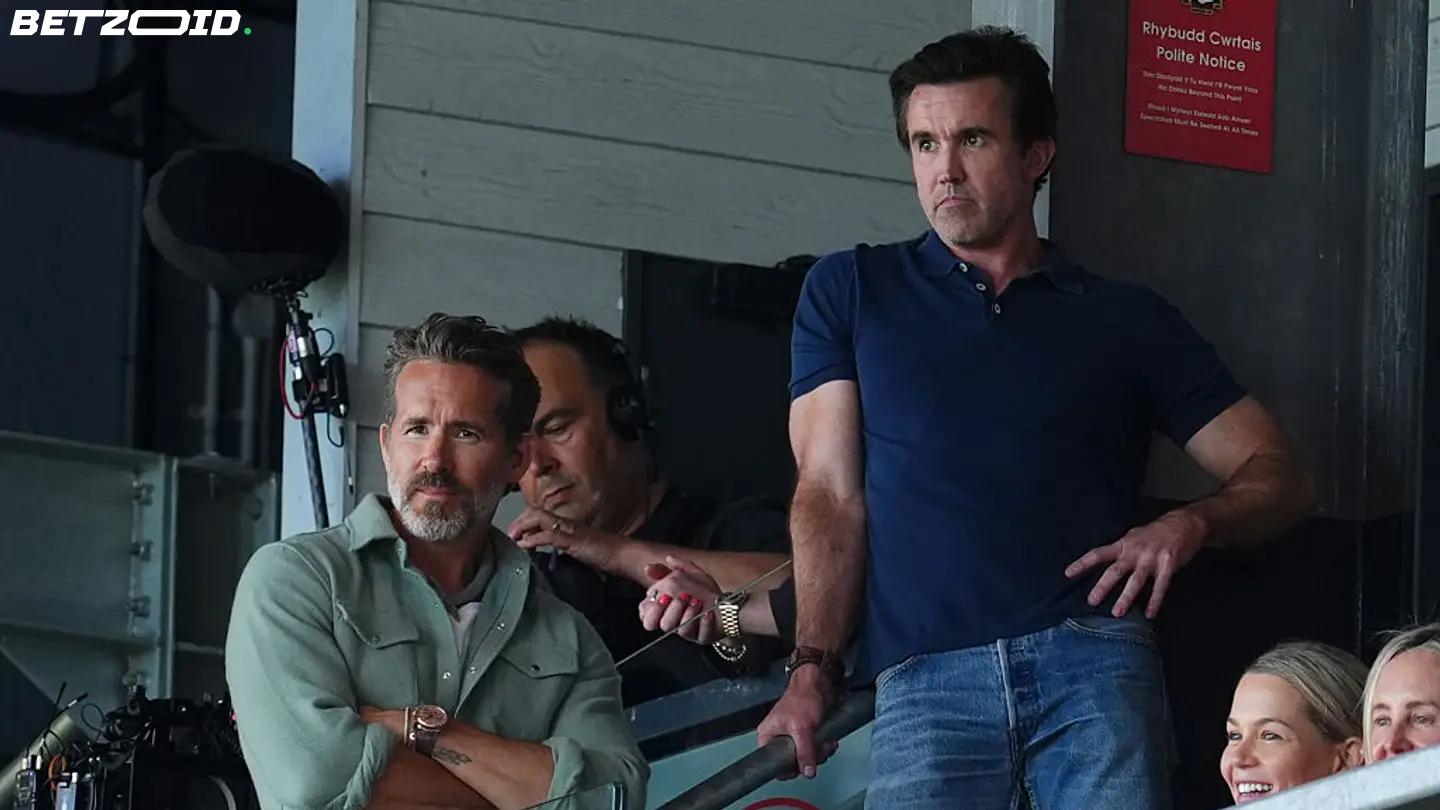
Phil Parkinson sat down with Rob McElhenney and Ryan Reynolds after Wrexham's second Championship game and told them: he needed more players than planned. Five days later, they had two new signings. That meeting, unplanned and held between filming content for a new sponsor, shaped the rest of Wrexham's summer.
The window was supposed to be clean. Quality over quantity. One sporting director overseeing a focused recruitment drive. Instead, Steve Nickson — Wrexham's inaugural sporting director — was stuck serving out his notice period at Newcastle United, which ended, with some irony, an hour after the transfer window closed. In his absence, chief executive Michael Williamson ran the operation, and what followed was anything but clean.
Wrexham ended up spending $48.55 million on seven senior signings. That's roughly double the number of recruits from a year ago in reverse — fewer bodies, more money. Whether that formula works for a club trying to survive their first Championship season is the question that won't be answered until May.
The Deals That Defined — and Dented — the Window
The early business was solid. Ben Whiteman arrived from Preston as their second signing, bringing Championship experience and leadership. Anthony Patterson came from Sunderland for a club-record fee in goal. Then Wrexham drew 1-1 with Cardiff on the opening day — a last-second equalizer cancelling out a dominant first half — and Parkinson decided he wanted more.
The Reynolds and McElhenney meeting unlocked it. Issa Kaboré joined on a permanent deal — the former Manchester City loanee — followed by Jacques Ekomié from Angers, a wingback signing that signalled Wrexham's intent to look beyond the usual EFL circuit. Those two felt like the window finding its rhythm.
Then came Deadline Day. Joe Worrall from Burnley and Callum O'Hare from Sheffield United got done with time running out — exactly the kind of proven Championship operators Wrexham defaulted to when the more ambitious targets went elsewhere. And they did go elsewhere. Femi Azeez, the Millwall attacker who was reportedly the dream signing for the attacking midfield role, made clear he'd only leave for the Premier League. He joined Brighton. Ipswich's Anis Mehmeti saw Wrexham as a step down after winning promotion. Joe Gelhardt had actually agreed to join — then Hull City hijacked it by offering something no Championship club can match: Premier League minutes on loan.
You can't compete with that. No amount of Hollywood backing changes the reality that a player chasing top-flight exposure will take it over Wrexham every time right now.
Thirteen Out, Three Fees, and One Painful Goodbye
Thirteen senior players left the club this summer. Three generated transfer fees. Lewis Brunt's sale to Bolton was the second-largest in club history — and the biggest of the McElhenney-Reynolds era — which tells you something about where Wrexham still sit in the wider market. Dan Scarr went to Salford, Harry Ashfield to Peterborough on Deadline Day, the latter only sanctioned when Peterborough made an offer Williamson couldn't ignore.
The departure that stings most for supporters is Arthur Okonkwo. The goalkeeper has gone on loan to Charlton Athletic, where he's already impressing, and will leave Wrexham for nothing next summer. He made his Nigeria debut in the summer. Wrexham couldn't convert that into a transfer fee — and that's a genuine recruitment failure, whatever the club's reasoning around the Patterson signing.
Elliot Lee and Paul Mullin, both genuine legends of the promotion era, had their contracts terminated. That's the quieter, harder side of a club making the jump to the Championship — the players who got you there don't always get to stay for the next chapter.
What Wrexham Actually Have Now
The wingback issues that undermined them last season appear addressed. Patterson is a clear upgrade in goal. O'Hare and Kaboré add quality in the middle. The 3-0 win over Millwall the day after the deadline closed — against the club whose star attacker they couldn't sign — was a timely statement.
But the squad looks thin at centre-back, and the striker situation remains a concern when you measure it against the division's top sides. Those aren't small gaps in a league as competitive as the Championship, where the margin between a top-half finish and a relegation battle can be razor thin.
Nickson starts work now — building a scouting network, identifying high-potential players from markets Wrexham haven't touched yet, and trying to make the club financially sustainable beyond the Reynolds-McElhenney investment. That's the long game. The short game — surviving and pushing up the table — depends on whether Parkinson can do what he's repeatedly done: get more out of a squad than it looks like it should give.
The window's verdict? Functional rather than transformative. And for a club at this level, for now, that might just be enough.