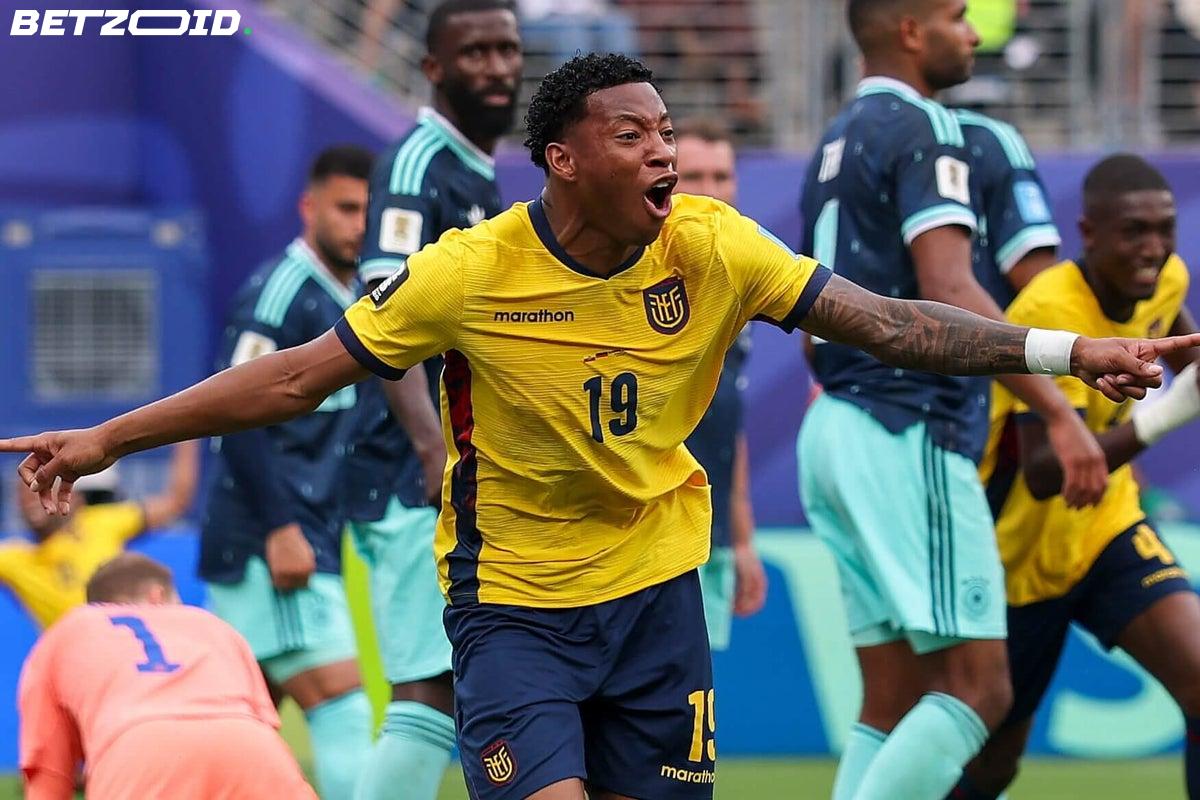
177 goals. We're not even through the group stage, and this World Cup has already set an all-time record in the tournament's 96-year history. That's not a quirk of the schedule — it's the story of the summer.
The expanded 48-team format plays an obvious role. Sixty games have already been played, more than 15 complete editions of the tournament in older formats. But raw volume doesn't explain everything. The goals-per-game rate of 2.95 is also the highest recorded since 1970. Something else is going on.
What the expected goals data actually tells us
Expected goals (xG) is the most useful lens here. It measures the quality of each chance before the shot — accounting for angle, distance, body part used — and right now, the tournament is wildly outrunning its xG projections.
When statisticians simulated all 1,469 shots from this tournament 100,000 times using individual xG values, the probability of reaching 165 non-own-goal strikes came out at just 2.9 per cent. We were, statistically speaking, equally as likely to see 147 goals as 165. That gap matters.
Some of the overperformance is explainable by talent mismatches. Germany scored seven past Curacao in matchday one — their squad is stacked with Champions League winners, while Curacao's goalkeeper Eloy Room plays his club football in the second tier of American soccer. That kind of fixture inflates totals in ways xG models don't fully capture.
Headers are sometimes cited as a factor, since they typically carry lower xG values, but the numbers don't support it. Headers account for 14 per cent of goals this summer, actually lower than 2022 (16 per cent) and 2018 (19 per cent). Long-range efforts are similarly unremarkable — 37 per cent of shots from outside the box, matching 2022 and trailing 2018.
The ball might be doing something strange to goalkeepers
Former England goalkeeper Joe Hart has pointed at the official match ball — the Adidas Trionda — as an underappreciated factor, specifically in how it moves off the boot at speed.
"I honestly feel as though this ball is coming onto the goalkeeper quicker than they feel it is off the foot," Hart told the BBC. His theory: subtle differences in trajectory are disrupting the split-second hand-eye decisions that elite keepers rely on.
He cited Messi's opener against Algeria, Mbappé's long-range finish against Senegal — where Champions League-winning keeper Edouard Mendy got close but couldn't adjust in time — and Martin Baturina's effort past Jordan Pickford. That's a pattern, not a coincidence.
For anyone pricing up goalkeeper clean sheet markets or anytime scorer bets, the implication is straightforward: the ball may be tilting the balance toward attackers in ways that won't fully show up in pre-tournament form data.
The rate will almost certainly drop in the knockout rounds, when cautious tactics and defensive structure inevitably tighten things up. But even accounting for that, what this group stage has produced is statistically extraordinary. A 2.9 per cent probability outcome unfolding in real time, in front of a global audience.
Sometimes football just refuses to follow the model.