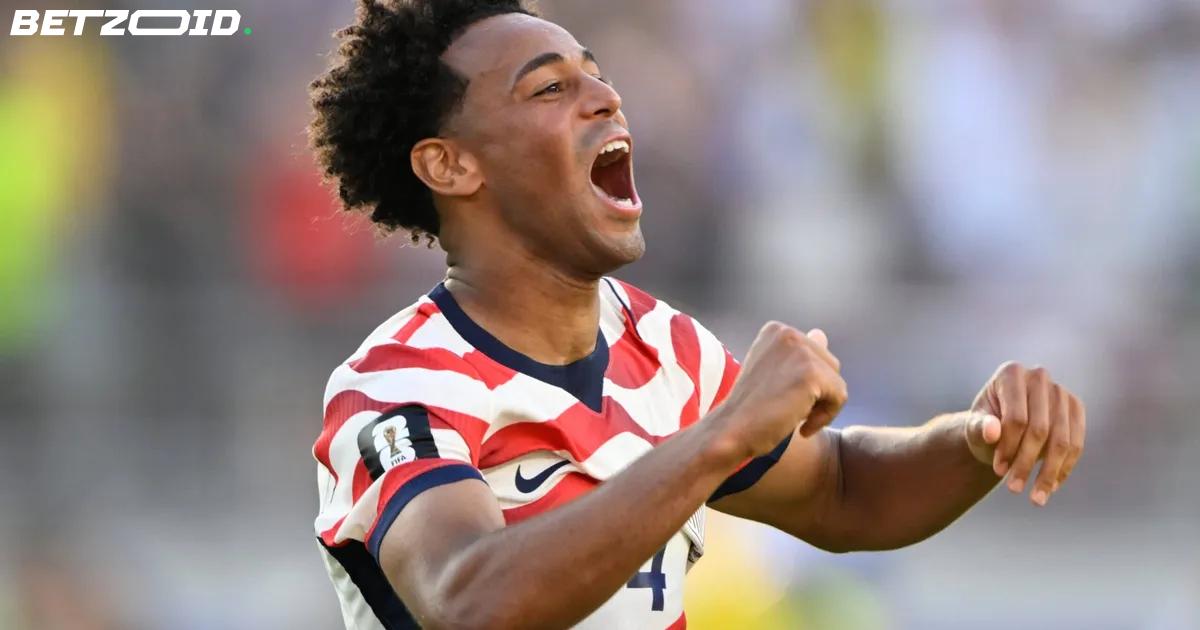
"I looked into the stands and I saw people who were emotional about getting knocked out because they really believed." That's Tyler Adams on the 4-1 loss to Belgium. Not the tactical breakdown. Not the individual errors. The faces in the crowd.
That framing tells you everything about where Adams — and arguably the entire USMNT project — stands right now. The Belgium game wasn't just a defeat. It was a referendum on whether American football had arrived. The answer, on July 6, was a painful no.
What actually went wrong against Belgium
Adams admits he can't pinpoint a single moment that unravelled the match — not Alex Freeman's headed ball that dropped to Nicolas Raskin, not the goal that came two minutes after Malik Tillman's equaliser, not Matt Freese's blunder. His read is more fundamental than any one play.
"The biggest thing for our team is to continue to put players in positions that they've played in big games, that when they're on the biggest occasion, nothing fazes you," he said. "Sometimes we just lack that. Collectively."
That's the honest summary of a team that looked genuinely dominant against Paraguay and Australia, then got swallowed whole by the scale of a knockout game against a top-10 European side. The group stage performances were real. So was the collapse. Both things are true, and Adams isn't trying to paper over either one.
He draws a deliberate contrast with the 2022 exit against the Netherlands — a loss that hurt the players without registering with the public. This one stung differently precisely because the public was in. Country Roads was being sung in stadiums. That matters, and it also raises the stakes for everything that follows.
The Balogun situation, in Adams' own words
The red card suspension controversy — Folarin Balogun reinstated after Donald Trump personally called FIFA president Gianni Infantino — was always going to define the Belgium game regardless of what happened on the pitch. Adams is clear on his own reaction at the time.
"Why would that affect me? I just got a player that is a crucial player for our team back." He wasn't distracted. He felt it was a boost.
Whether it lit a fire under Belgium is a different question, and Adams doesn't dodge it. He acknowledges the motivation angle without pretending he can control it. "I don't know how that affects the rest of the group. I can only speak for myself." That's about as honest as post-tournament reflection gets.
He praised Balogun — who scored three goals in four appearances before all of this — for how he carried himself through a situation that was entirely outside his control. "Everything is organic to who he is as a person," Adams said. A player who went from breakout star to political pawn inside a week and handled it without drama. That counts for something.
What he's telling the teenagers
Eight teenagers are now in Mauricio Pochettino's squad, including Philadelphia Union's Cavan Sullivan. Adams spoke personally to Red Bull New York pair Adri Mehmeti and Julian Hall before they even arrived at camp. That's not soft mentorship. His message is the opposite of comfort.
"I don't care if you're coming from Dortmund. I don't care if you're coming from Europe. When you're in the national team, you're a U.S. national team player. If I have to go into a 50-50 with you, I'm going as hard as I can. It doesn't matter if you're 16, 25, 35. That's my mentality."
The programme is being rebuilt in real time, with Pochettino — who Adams holds in notably high regard both as a coach and as a person — signed through 2030. The question now is whether the next cycle produces players who can handle Belgium moments, not just Paraguay ones. Adams knows the gap. He's lived it.
"These kids just need to understand that it's about doing the work every single day. Now that your foot is in the door, this is your opportunity. Take it."