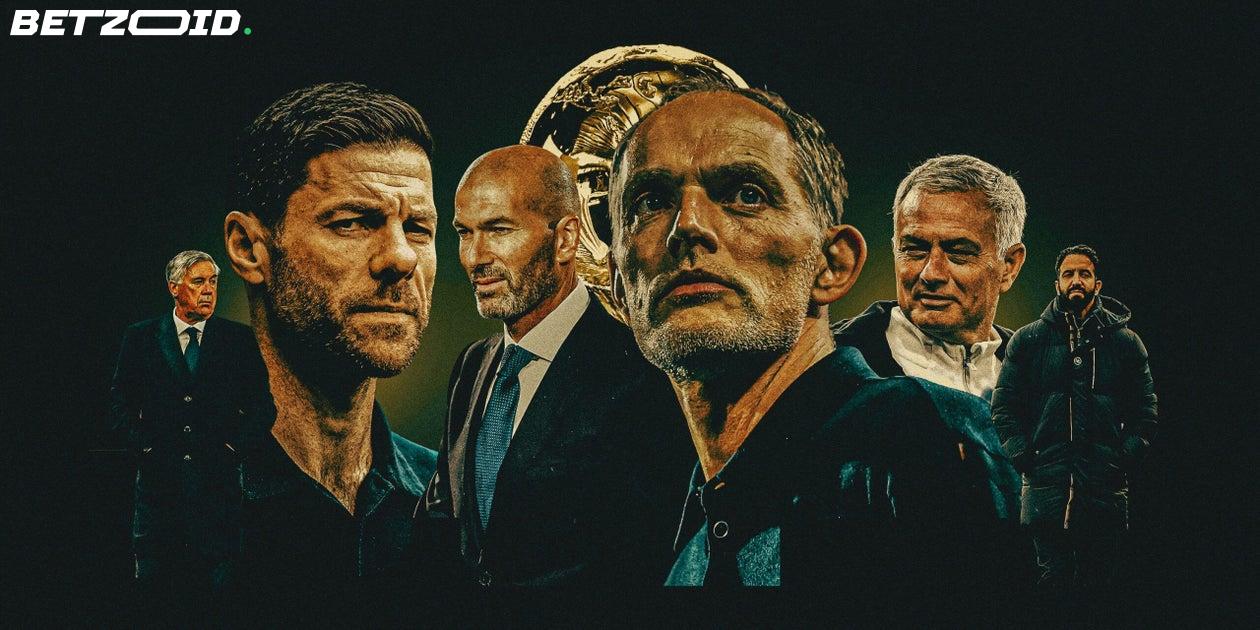
Thomas Tuchel just made a big statement. He's sticking with England until 2028, which means he's passing up potential jobs at Real Madrid and Manchester United. And he's not alone in this trend.
The English FA chief Mark Bullingham says Tuchel is "really enjoying the job" so much that he's willing to skip a return to club management after this summer's World Cup. While there's technically a break clause in his contract, the extension tells us everything we need to know.
Something interesting is happening in football right now. Top coaches are taking international jobs earlier in their careers and staying longer. Why? They get more time to think, watch matches, and learn. They can visit clubs freely and get inside access.
Plus, there's no owner or sporting director limiting your choices because of financial fair play rules. You're stuck with the talent your nation produces, but at least the choice is yours. In club football, managers are increasingly boxed into just training sessions and match days.
The World Cup Factor
Pep Guardiola and Arne Slot have both made jaded comments about how quickly league titles and cups are forgotten. But nobody forgets a World Cup. This summer's tournament is set to be the biggest and most-covered ever, and that's caught the attention of elite coaches.
Julian Nagelsmann stayed on as Germany coach after Euro 2024. Carlo Ancelotti is reportedly staying with Brazil through 2030. Even at 66 years old, Ancelotti would still be perfect for Real Madrid right now when they desperately need a coach.
This raises important questions. Is international football becoming the pinnacle again? And where do superclubs turn when they need supercoaches?
If Guardiola leaves Manchester City after 10 years this summer, it would be the end of an era. He'd probably take another break or maybe even take an international job himself.
Zinedine Zidane has waited six years for the France job, which will finally open up after the World Cup when Didier Deschamps steps down. Jurgen Klopp turned down Germany after Euro 2024 and seems happy with his Red Bull role. When asked about the Madrid job after they fired Xabi Alonso, Klopp said it "triggered nothing in me."
A Coaching Vacuum Is Forming
Jose Mourinho is at Benfica with a break clause that lets him leave 10 days after the season ends. Could he get another shot at Real Madrid? Or maybe take over Portugal after the World Cup?
The reality is clubs looking for coaches this summer have fewer proven targets than ever. And these targets keep moving around, making decisions harder.
Who's going to replace Guardiola, Klopp, Ancelotti, and Mourinho as truly transcendent figures? Mikel Arteta is six years into his Arsenal tenure and still hasn't won the Premier League. Enzo Maresca got sacked by Chelsea just months after winning the Conference League and Club World Cup.
Coaches who seem like the future can quickly look like the past. Some would argue Arne Slot is the latest example. Mauricio Pochettino hasn't had the career many expected after reaching the Champions League final with Tottenham.
Ruben Amorim won Sporting's first league title in nearly 20 years, but like Erik ten Hag, he'll be remembered for not restoring Manchester United. Does that make him a bad coach? No. But the noise United generates is deafening.
For bettors, this coaching chaos creates uncertainty around traditional powerhouses. Manchester United and Tottenham are both searching for answers. Real Madrid needs to figure out their post-Ancelotti future. These situations make betting on these clubs' futures much trickier.
There's also the question of whether mid-table success translates upward. Would Bournemouth's Andoni Iraola or Crystal Palace's Oliver Glasner succeed at bigger clubs? The requirements are totally different. The scrutiny is far greater.
Take Brentford as an example. Was Thomas Frank the key to their success, or was it their incredible club structure? Under replacement Keith Andrews, who'd never managed before this season, they're seventh and four points off Champions League places.
Brighton is similar. Were Chris Hughton, Graham Potter, Roberto De Zerbi, and Fabian Hurzeler the main reasons for success? Or was it the analytics and recruitment that survived even when key executives left?
Clubs are also becoming pickier. They want a specific style when football is constantly changing. They want coaches to stay in their lane and not challenge them on recruitment or strategy. This makes the coaching pool feel even smaller.
Antonio Conte has won titles in two countries with four different clubs, but he's seen as too much hassle. Vocal winners get ruled out when maybe they're exactly what struggling clubs need.
Manchester United, Real Madrid, and Tottenham will all face these dilemmas soon. Is the scarcity of top coaches real or artificial? Should they go with experience or potential? Can they even find the right coach when their club structures might be broken?
For now, the English FA doesn't have to worry. Tuchel told reporters: "There is a possibility that I will be tempted to go back to club football. But not in the next two and a half years."