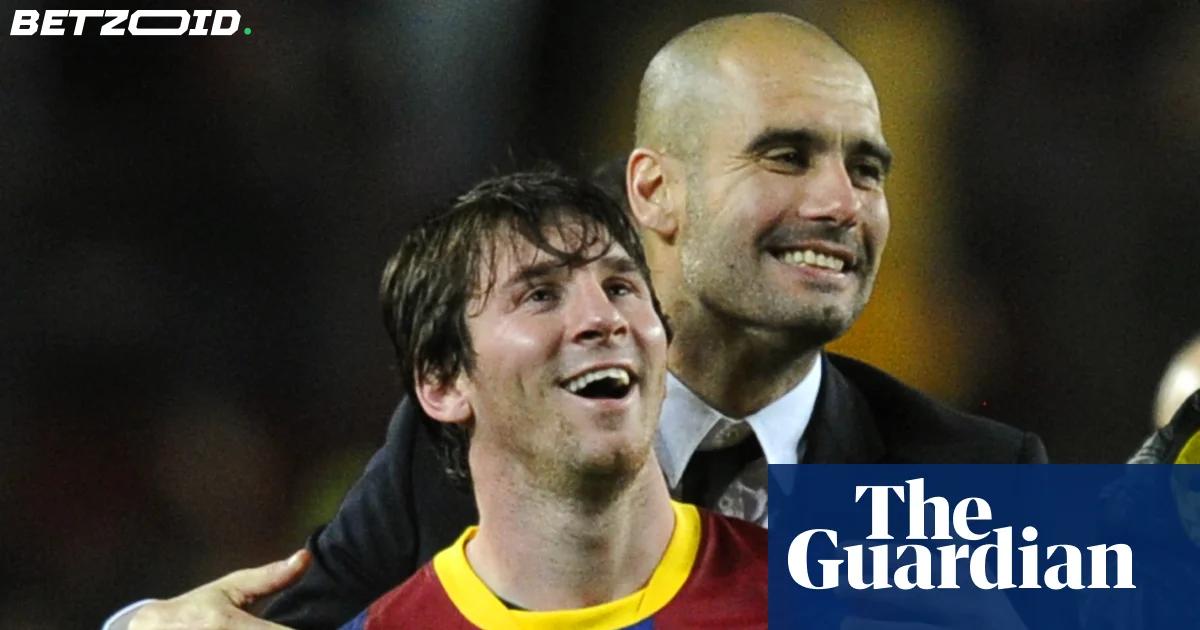
MLS has been chasing the wrong thing. Every conversation since Lionel Messi's inevitable decline begins the same way: who's next? The answer, almost certainly, is nobody. There is no next Messi. But there might be something better — the man who built him.
Pep Guardiola officially confirmed his departure from Manchester City this summer after a decade that produced six Premier League titles, two Champions Leagues, and a style of football that reshaped how the game is coached globally. He's taking a break. The question is what comes after it.
New York already has a hold on him
This isn't a cold pitch. Guardiola spent his 2012-13 sabbatical in New York — deliberately, not by accident. He chose the city to decompress after Barcelona, to absorb new ideas, to reset. "He chose New York for his sabbatical because the city intrigued him," the Financial Times noted at the time. "He thrives on New York's culture."
That's not nothing. Coaches don't spend a year somewhere that doesn't mean something to them.
New York City FC is also about to move into a soccer-specific stadium at Willets Point in Queens — a new ground, a new chapter, a blank canvas. For a manager who has always been drawn to building rather than inheriting, that kind of project has real pull. He already holds a "global ambassador" role at City Football Group, which includes NYCFC among its clubs. The infrastructure for this move practically builds itself.
What Guardiola would actually mean for MLS
Messi moved the needle on shirts, attendances, and social media impressions. Those numbers are real and they were extraordinary. But they leave with him. A coach of Guardiola's profile doesn't just generate headlines — he changes how a league is perceived from the inside out. The coaches MLS produces, the tactics its teams run, the way American soccer is discussed in European dressing rooms. That's a longer-lasting shift than any single player's marketability.
There's also a genuine sporting challenge here that might appeal to him. MLS's salary cap structure forces roster creativity in ways Guardiola has never had to deal with. At City, money was rarely the constraint. In MLS, outside of a handful of designated players — one of whom was, until recently, Messi, and another is former Guardiola pupil Thomas Müller at Inter Miami — squads are built within tight limits. What could the league's most tactically obsessive manager do when he can't simply outspend his problems? That's an interesting question. No limits on coaching staff spending means an ambitious owner could still make the numbers work at the top end.
Guardiola has hinted at a lengthy break. "I need to breathe a little bit and relax. I will be out for a while," he said on the day his City exit was confirmed. The timeline of that sabbatical could align neatly with NYCFC's stadium opening — ready to walk into a new project at the exact moment one becomes available.
MLS will never replace what Messi gave them. The record attendances across North America, the global shirt sales, the media coverage — that was a once-in-a-generation moment built around a once-in-a-generation player. Trying to replicate it with another signing is the wrong strategy entirely.
The guy who spent a decade coaching arguably the greatest player who ever lived, who has already fallen for New York once, and who is about to have time on his hands — he's not a consolation prize. He might be the smarter bet.