The FIFA World Cup runs every four years, and that gap isn't arbitrary — it's the only realistic way to run the biggest sporting event on the planet.
From the moment one tournament ends, the next begins taking shape. Qualification campaigns span continents, involving hundreds of national teams across multiple rounds. Compress the cycle and the qualification process collapses. Extend it and you lose the momentum that keeps fans invested. Four years is the ceiling and the floor.
How it started — and the two editions that never happened
The first World Cup was held in Uruguay in 1930, with the hosts defeating Argentina 4-2 in the final. Every four years after that, the tournament returned — except twice. The 1942 and 1946 editions were cancelled because of World War II, the only times the cycle has been broken in the tournament's history.
Brazil hosted the 1950 return, and the event has grown steadily since into the most-watched sporting event in the world. That scale is exactly why host nations need the full four-year window. Stadium construction, infrastructure upgrades, security planning, and accommodating millions of travelling fans don't happen in a shorter timeframe. The 2022 Qatar edition took over a decade of preparation.
2026 is already shaping up to be unlike any before it
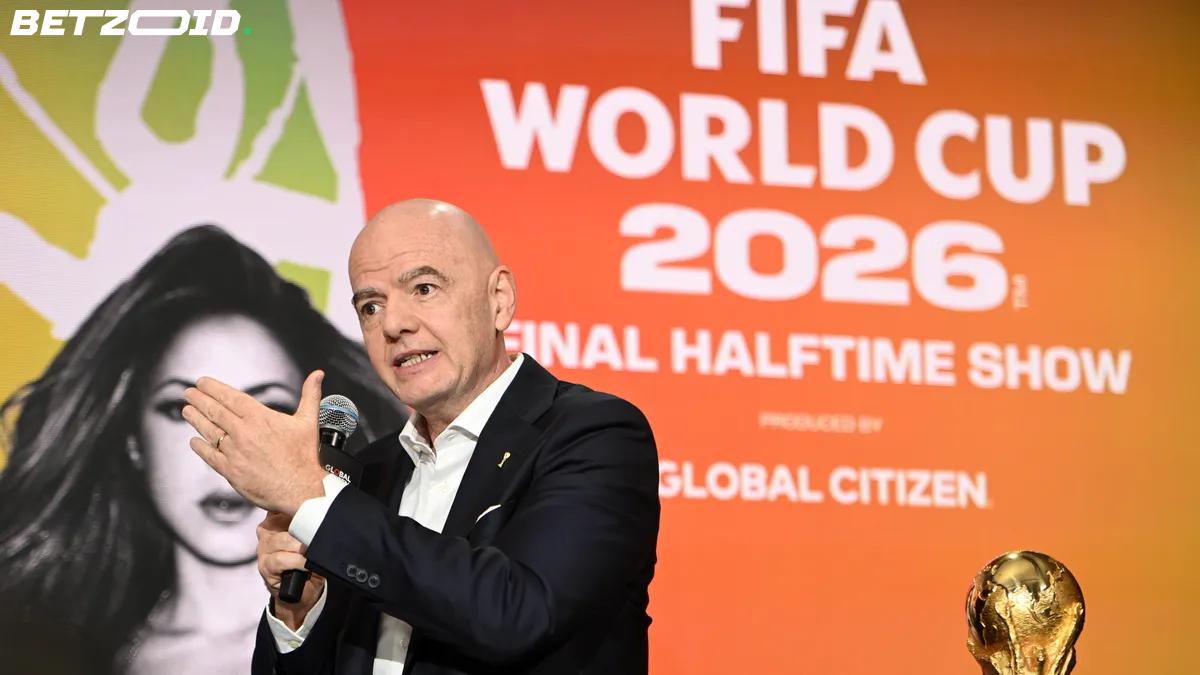
The next edition kicks off on June 11, 2026, with the final on July 19. For the first time, three nations are co-hosting: Canada, Mexico, and the United States, across 16 cities.
The opening day alone sets the tone. Mexico face South Africa at the Estadio Azteca in Mexico City — one of football's most storied venues — while South Korea take on Czechia at Estadio Akron in Guadalajara. Two matches, three continents represented, and a tournament that's already generating serious betting market interest well over a year out.
The expanded 48-team format means more matches, more upsets, and more unpredictability than any previous edition. Outright winner markets are already open, and the sheer volume of games will create pricing opportunities that a 32-team tournament simply doesn't offer.
The 2026 World Cup will be the largest in the competition's 96-year history. Uruguay won the first one with 13 teams. What happens with 48 is anyone's guess.