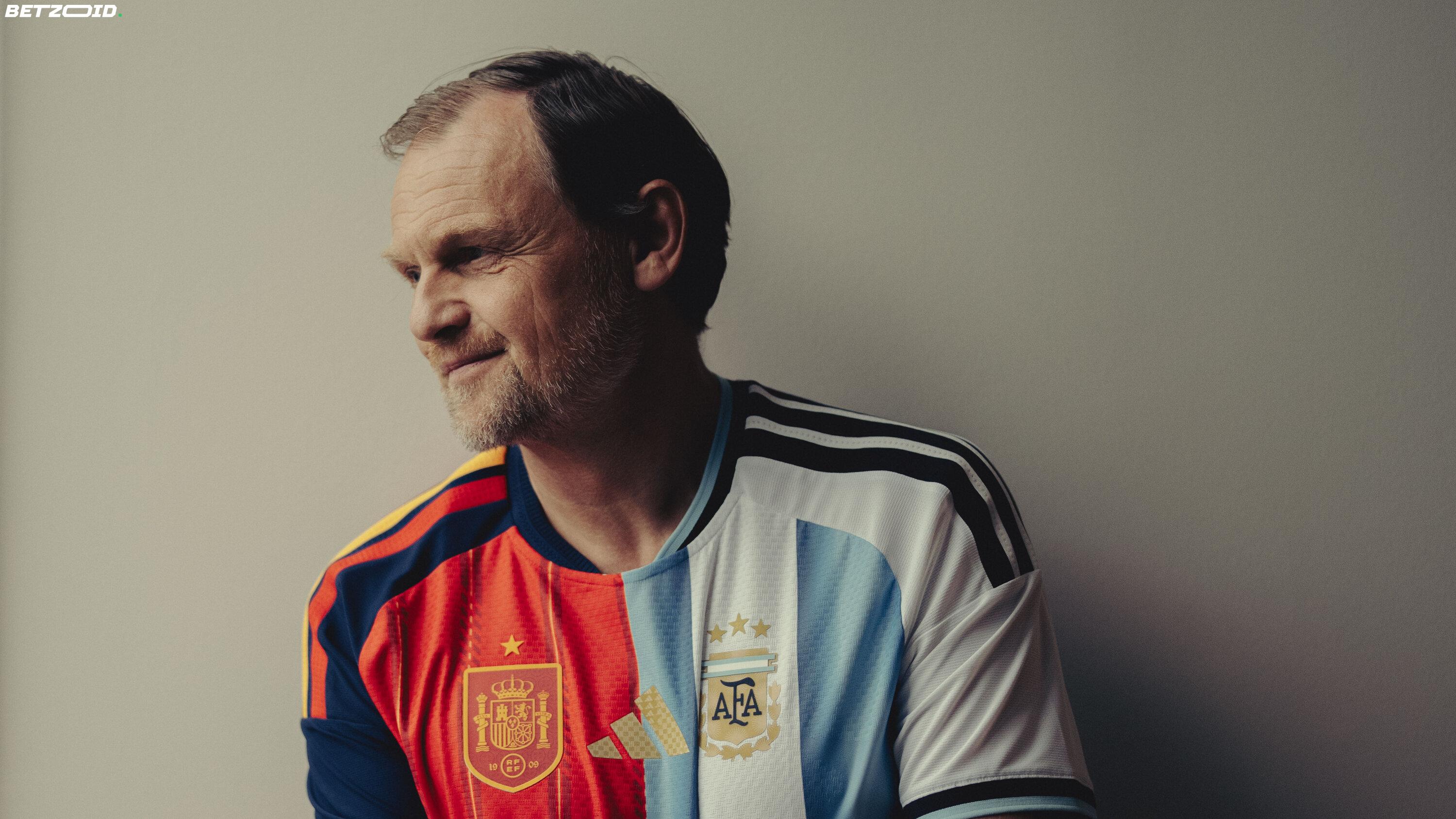
"You couldn't have scripted it better." That's Adidas CEO Bjørn Gulden, and he's not wrong. When Spain and Argentina kicked off the World Cup final in New Jersey, Adidas had its logo on both kits, both superstars — Messi and Lamine Yamal — and the ball itself. A marketing department's fever dream, delivered in real life.
The numbers back up the swagger. Adidas sold four times as many jerseys and twice as many balls compared to Qatar 2022. Event-related revenue is projected to top $1.7 billion. By any commercial measure, this has been the company's tournament.
The real target isn't the trophy — it's Nike
The World Cup moment is real, but Gulden is playing a longer game. Adidas posted about $5.5 billion in North American sales last fiscal year. Nike did $20.5 billion. That's not a gap — it's a canyon. And Gulden knows it.
"In the U.S., our competitor has been much, much, much stronger than us," he said. "So the plan is to be more American."
That means replacing European executives in the North America division with Americans who actually understand the local sports ecosystem — high school programs, college athletics, the draft. It means signing Anthony Edwards to a signature shoe deal in basketball. It means inking college quarterbacks and NFL rookies like Fernando Mendoza, the Raiders' top draft pick. Adidas spent years pulling back from retail partners like Dick's Sporting Goods and specialty running stores. Now it's trying to rebuild that shelf space, which is exactly the kind of unglamorous work that actually shifts market share.
Distribution fixes don't generate headlines. But they're why Nike still has a $15 billion annual advantage in the same market.
The marathon matters more than the final
If there's an underrated story in Adidas's 2025, it's not New Jersey. It's London. In April, Sabastian Sawe and Yomif Kejelcha both broke the two-hour marathon barrier wearing Adidas's Adizero Adios Pro Evo 3 — a 97-gram, $500 racing shoe with carbon-fiber construction. For a brand with a historically inconsistent running business, that's a credibility marker that lasts well beyond a tournament cycle.
World Cup finals are won once every four years. Performance tech that redefines what a shoe can do stays in the conversation much longer — and in the running market, where Nike's Vaporfly and Alphafly have dominated the conversation for years, it puts Adidas back in the frame.
- Adidas sponsors both World Cup finalists (Argentina and Spain)
- Endorsement deals with Messi and Lamine Yamal
- Jersey sales up 4x vs Qatar 2022; ball sales up 2x
- Projected World Cup revenue: over $1.7 billion
- North America sales gap: Adidas $5.5bn vs Nike $20.5bn
- Adizero Adios Pro Evo 3 worn by two sub-two-hour marathoners in April
Gulden's honest about the timeline. He says it will take many years to close the gap on Nike, which has its own problems — sluggish China sales, distribution headaches, a cautious American consumer. None of that makes the path easier for Adidas. It just means the race is more open than it has been in decades. "We need to build credibility," Gulden said, "meaning having the best products. And we need to have the best athletes." On Sunday in New Jersey, they had both. The question is whether that translates to checkout counters in Ohio.