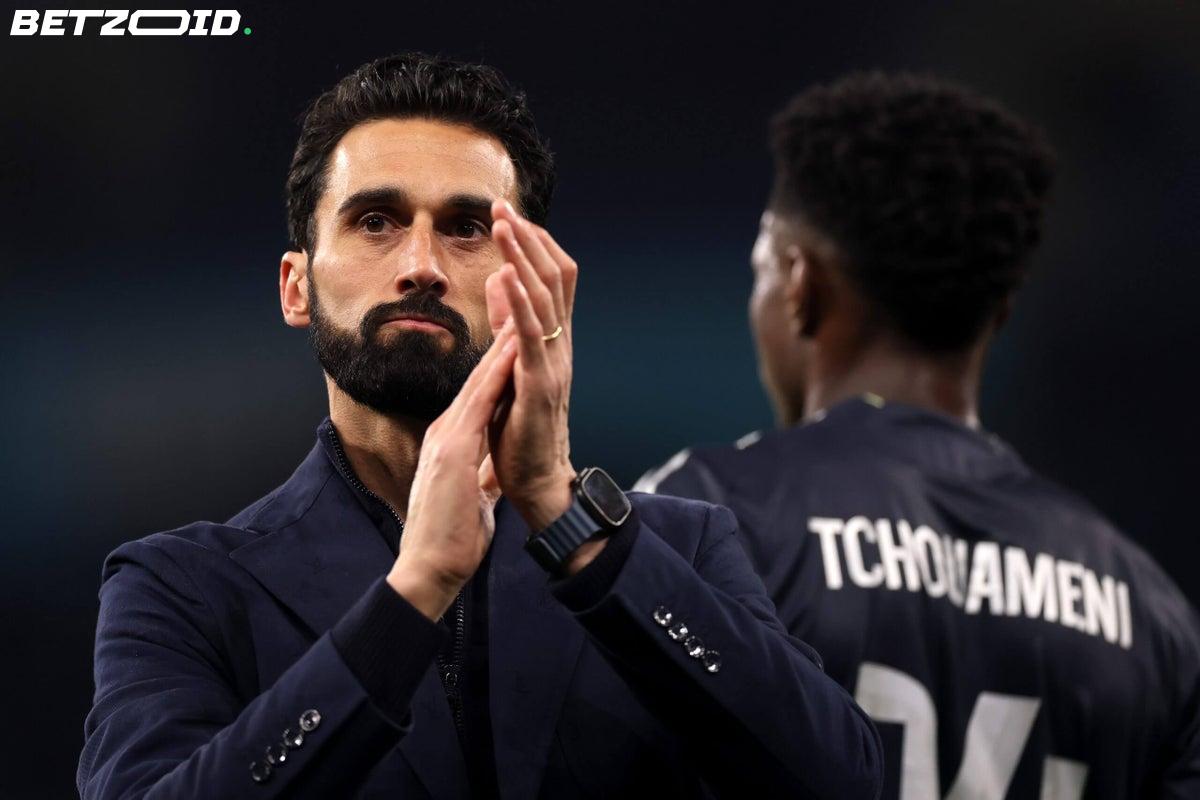
"Arbeloa is getting flak for not discussing tactical matters in press conferences, but the reality is that he prepares extensively for matches." That's the verdict from inside Madrid's training ground — and after back-to-back wins over Manchester City to reach the Champions League quarter-finals, it's getting harder to argue otherwise.
When Alvaro Arbeloa took charge in January, the optics were rough. Six months of senior coaching experience. A humiliating opening defeat at second-division Albacete. A La Liga lead that quickly flipped into a four-point deficit to Barcelona. Spanish media were already filling column inches with Pochettino, Klopp, and Emery as summer candidates before Arbeloa had even settled into his office.
Then Madrid beat City. Twice.
The Alonso problem no one wanted to say out loud
The Athletic had already reported in October that Alonso was losing the dressing room. The increased video sessions, the raised training intensity, the tighter discipline — all of it landed badly with a squad that, fairly or not, has always operated on individual brilliance as much as collective structure. One source put it plainly: "Almost no one was happy with Xabi, including many starters."
Arbeloa has taken a different approach. Players are regularly dropping into his office for one-on-one conversations. Brahim Diaz was one of the latest — within days of that chat, he was starting against Celta Vigo and hasn't stopped since, including both legs against City. Access restrictions at the training ground and on matchdays have been eased. The atmosphere has visibly shifted.
That doesn't make Arbeloa universally popular — sources acknowledge there are unhappy players, mostly those not featuring regularly. But unhappy squad members over playing time is a different problem than a dressing room that's checked out on the manager's entire approach.
Tactically sharper than the narrative suggests
The easy take is that Arbeloa loosened the reins and let the talent breathe. The reality is more nuanced. Vinicius Junior has been electric since Alonso's departure, yes — but Valverde's opener in the first leg came directly from a rehearsed training ground move. Arda Guler and Fran Garcia marking Haaland at corners looked chaotic; it was planned. Madrid's analysts had identified Ruben Dias, Marc Guehi, and Rodri as the real aerial threats from City set pieces, not Haaland, who tends to lurk for second balls.
Pep Guardiola, after his side's exit, offered: "I liked what I saw. He has made a very good impression on me. He'll have a long career." Coming from Guardiola in defeat, that carries weight.
What makes Madrid's run more striking is that they've done it without Bellingham, Militao, Mbappe, and Rodrygo. Arbeloa has leaned on youth — 18-year-old Thiago Pitarch has been a standout in midfield — and that's bought him genuine goodwill with the fanbase. Four wins in a row changes the conversation considerably.
The club hasn't won a major title since the season before Alonso arrived. Madrid now face Bayern Munich in the quarter-finals, and suddenly the odds on them going deep in this competition look a lot more interesting than they did in early March. Arbeloa reportedly has a deal until at least June 2027, and for the first time since he took the job, that timeline doesn't feel absurd.
Whether he stays beyond the summer still depends entirely on how this season ends. But the mood inside Valdebebas has shifted — and results tend to follow mood in elite football.