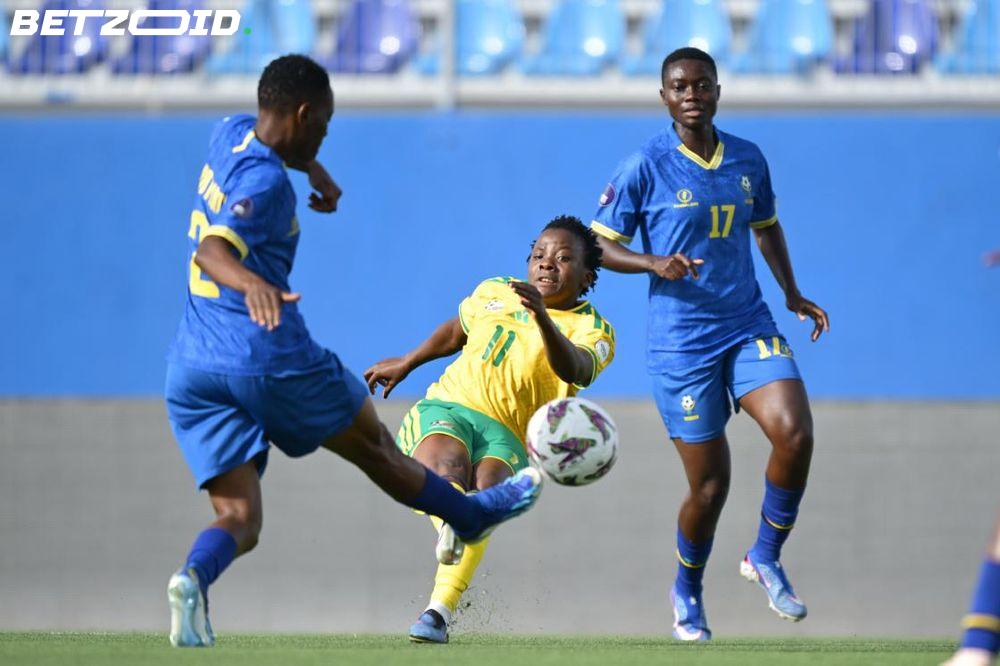
Banyana Banyana are through to the Wafcon quarter-finals after beating Burkina Faso 2-1 in their final Group B match in Morocco. If they go all the way and defend the continental title they won in 2022, South Africa will have a back-to-back champion on its hands. The country probably still won't shut down for it.
That's not cynicism — that's just the commercial reality of women's football in South Africa right now. When Bafana Bafana made the FIFA World Cup knockout stages, they came home to a hero's welcome. Banyana's 2022 Wafcon triumph, a genuinely historic achievement, didn't come close to generating the same national moment. Winning again won't automatically change that unless the financial structures underneath the game change first.
The gap in numbers
The PSL generates over R1 billion per season. The Hollywoodbets Super League, which underpins the women's game, runs on roughly R17 million annually. To put that in sharper context: Mamelodi Sundowns' squad alone is valued at close to R760 million — nearly 45 times the entire women's league budget.
That gap doesn't just explain the difference in media coverage or ticket sales. It shapes everything — player development pathways, coaching resources, broadcast deals, the whole ecosystem that turns sporting success into cultural moments. You can't manufacture the kind of national investment Bafana enjoy without the commercial engine to sustain it.
The argument that women's football simply deserves equal enthusiasm is fair in principle. In practice, public attention tends to follow money, not the other way around. Without sponsors, broadcasters, and club investors treating the women's game as a viable product — not a charity case — the cycle stays closed.
What a second title would actually mean
A second Wafcon crown would be a landmark achievement by any measure. Consecutive continental titles in any code demand respect. But landmark achievements and structural change are different things, and confusing one for the other is how progress stalls.
The betting market reflects the same logic — women's football in South Africa draws a fraction of the wagering attention the men's game commands, not because the quality doesn't warrant it, but because the commercial infrastructure that drives engagement simply isn't there yet.
Banyana can control what happens on the pitch in Morocco. The R983 million revenue gap between the two leagues is a problem that won't be solved by a trophy lift.