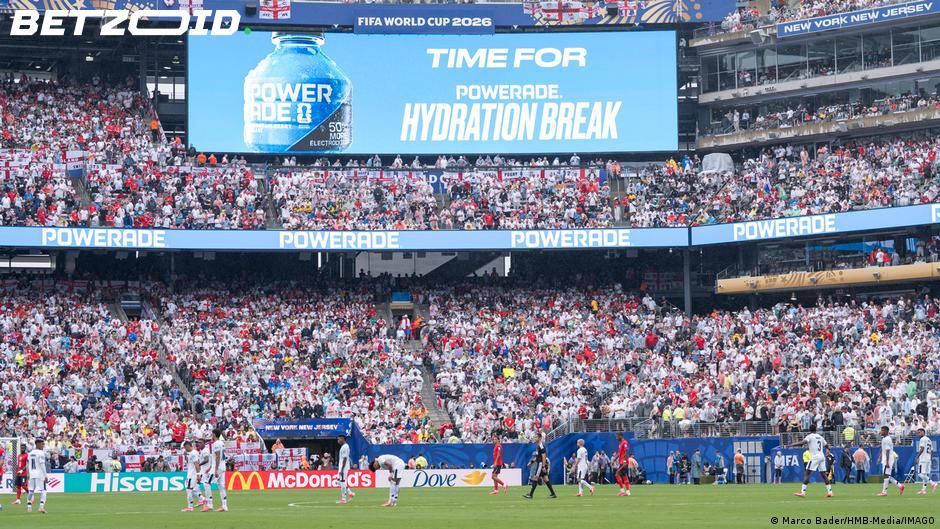
"If the players really need a drink, they should just do it before taking a corner kick." That Iraq fan in Philadelphia put it better than any pundit has managed so far. The mandatory hydration breaks at the 2026 World Cup have become the tournament's defining argument — and not in a good way.
The rule stops play twice per match, around the 22nd and 67th minutes, regardless of temperature, weather conditions, or stadium type. When England vs Ghana was paused after 22 minutes at Boston Stadium, boos cascaded from the stands. It wasn't an isolated reaction. Match after match, the interruptions are drawing the same response from fans who came to watch football, not a sponsored timeout.
Coaches are winning. Fans are losing.
What was sold as a health measure has quietly become a tactical weapon. Coaches use the breaks to adjust formations, reset momentum, and disrupt an opponent who might have been building something dangerous. Jürgen Klopp admitted as much: "As a coach, I would have loved it." That's the problem in a single sentence.
The data backs it up. Research using Opta figures from every group-stage match found that momentum shifted significantly in 32% of games after the first break and 26% after the second. Average match momentum dropped 17% following each interruption — and the team that was in the ascendancy before the break suffered the sharpest fall. So the breaks don't just pause football. They actively punish the side playing better football at that moment.
Virgil van Dijk said the breaks are "far from ideal for neutral viewers." Thomas Tuchel pointed out they unnecessarily extend match length. Paraguay's Gustavo Alfaro went further, suggesting football is drifting toward a four-quarter structure — a comment that carries more weight when you consider the tournament is being played in North America, where that format dominates.
The money question FIFA doesn't want asked
Broadcasters in multiple countries are filling the guaranteed stoppages with commercial breaks — something almost unheard of in football before this tournament. The breaks even carry their own sponsor, displayed on stadium screens as the whistle blows. Gianni Infantino denied FIFA profits from this directly, saying "all contracts were already signed before they were introduced." Whether that's reassuring or just technically accurate is a matter of interpretation.
Sports medicine experts do support hydration breaks in extreme heat. Dr. Tim Meyer noted that cooling breaks measurably reduce body temperature and can protect players from physical decline in dangerous conditions. But he also acknowledged the trade-off: "Players run less — and, above all, less intensely — and play more safe passes. From a health perspective, that is probably sensible, but it certainly isn't in the spirit of the sport."
That sentence is the whole debate. The breaks are being applied universally — including in climate-controlled, air-conditioned stadiums in Dallas where the heat argument simply doesn't hold. The original justification has become an afterthought. What's left is a rule that gives coaches more power, gives broadcasters ad inventory, gives FIFA a sponsored moment, and gives fans two guaranteed reasons per match to check their phones.
Infantino says he'll evaluate the World Cup experience before deciding the rule's future. The fans booing in Boston already have their verdict.