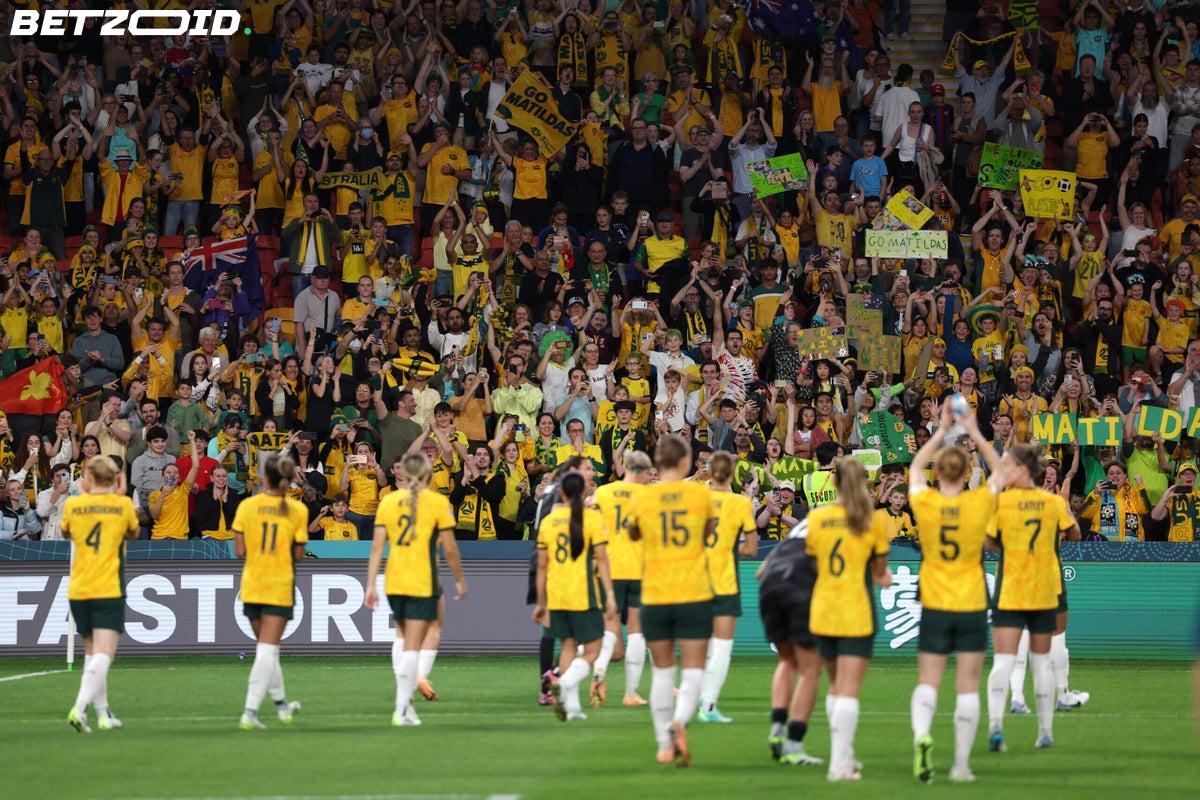
Remember August 2023? That's when the entire nation of Australia fell head over heels for the Matildas. Sure, they lost to England in the World Cup semi-finals. But co-hosting the tournament changed everything for women's football down under.
Get this: 11.15 million Aussies tuned in to watch the Matildas knock out France on penalties in the quarter-finals. People were celebrating at Australian rules football matches happening at the same time. It was absolutely massive.
Now Australia's hosting the 2026 Women's Asian Cup, and the stakes couldn't be higher. The semi-finalists punch their ticket straight to the 2027 World Cup in Brazil. Even quarter-final losers get another shot through a playoff system.
The tournament kicks off today with Australia taking on the Philippines at Perth Stadium. For legendary striker Sam Kerr, now 32, this brings things full circle. She scored her first international goal when Australia won this tournament back in 2010, and she's the only player left from that squad.
Japan enters as favourites with their FIFA ranking of No. 8 compared to Australia's No. 15. But playing at home gives the Matildas a serious edge, especially with the crowd support they've experienced lately.
The Clock Is Ticking for This Generation
Chelsea defender Ellie Carpenter summed it up perfectly in January: "If there was a time to win it, it would be this one." Translation? This might be the last real chance for this group of players, particularly with Kerr, to win silverware together.
For punters looking at Australia's chances, home advantage is huge. But there's also pressure that comes with expectations. The Matildas have never won a major trophy on home soil, and everyone knows this could be their best shot.
Clare Wheeler's journey shows how women's football has grown in Australia. She started playing at 10, worked through the youth system, and eventually landed at Everton. Now she's back home, hoping to start against the same Philippines team she scored against in an 8-0 qualifier.
The Domestic League Problem Nobody's Talking About
Here's where things get complicated. After the World Cup, the domestic A-League Women (ALW) initially exploded. Attendance jumped 108% in the 2023-24 season, topping 300,000 fans. TV viewership shot up 133%. Club memberships increased by a whopping 611%.
But that momentum didn't last. This season, attendances dropped 26%. Even worse? Most ALW players need second jobs because the average salary is just $30,000 AUD (about £15,540). That's the lowest of any major Australian women's sport.
Wheeler remembers earning just AU$500 in her first season. "Just petrol money, basically," she says. She was juggling school, working at Kmart, and trying to play football. Many players hit their mid-twenties and have to choose between football and a real career.
The Professional Footballers Australia union released reports showing 62% of players work second jobs. The league's also losing talent to Europe and America, where conditions are better. That's a problem for the national team's long-term future.
Compare that to New Zealand, Australia's 2023 co-host. They invested in facilities and even helped create a new A-League club, Auckland FC. Australia's domestic league hasn't capitalised the same way on World Cup momentum.
This Asian Cup offers $1.8 million in prize money, unchanged from four years ago. It's now the lowest-paying continental championship in women's football. At least there are improvements: the first mascot, VAR for every match, and over 150,000 tickets sold before kick-off.
The final at Sydney's Stadium Australia could draw 79,500 fans. That would send a powerful message about where women's football stands in Australia right now.
Wheeler hopes the home crowd brings that World Cup energy again. "Being at home just by itself lights a fire," she says. For the Matildas, this tournament is about more than just qualification. It's about proving the World Cup wasn't a one-off moment but the start of something lasting.