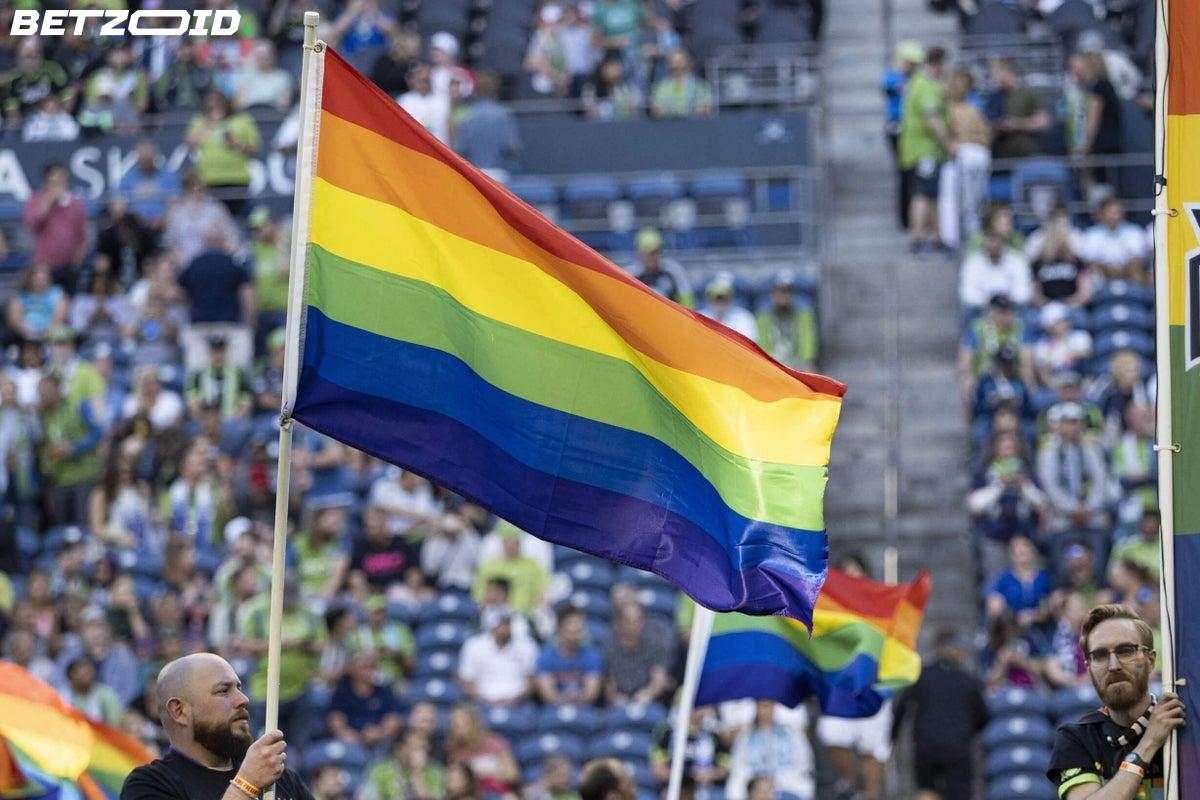
Iran's Football Federation has formally asked FIFA to ban any LGBTQ+ ceremonies, symbols, or promotional activities from Friday's World Cup group match against Egypt in Seattle. FIFA's response: no.
In a statement Wednesday, FIFA confirmed that "rainbow flags and other flags representing sexual orientation and gender identity are permitted under the FIFA World Cup 2026 Stadium Code of Conduct." The tournament, it said, is an "inclusive event that welcomes people from all backgrounds." That's a direct contradiction of what both federations have been pushing for since December.
How this match became the flashpoint
The chain of events here is genuinely awkward for everyone involved. Seattle's host committee branded June 26 as a "Pride Match" before the World Cup draw even happened — a reasonable choice for a city with a strong LGBTQ+ identity and a Pride weekend calendar fixture. Then the draw handed them Egypt vs. Iran: two nations that not only share cultural opposition to the Pride movement but actively criminalize same-sex relations. Iran's penal code imposes a maximum penalty of death. Egypt's law provides for prison sentences and fines.
The collision was inevitable.
The Iranian federation's statement to The Athletic didn't name the LGBTQ+ community directly, referring throughout to "this movement." Their position, shared with Egypt, was unambiguous: no ceremonies, no symbols, no association with Pride inside or around the stadium. Sources familiar with the negotiations say both federations went further in private — pushing for all Pride-related branding across FIFA touchpoints in Seattle to be scrubbed entirely. FIFA didn't agree to that either.
FIFA president Gianni Infantino tried to defuse the framing back in January, telling Swiss newspaper Weltwoche: "I must clarify that there will be no 'Pride Match' at the World Cup. There will be a FIFA World Cup match in Seattle, and on the same day, events organised by external organizations will be taking place in the city." Technically accurate. Politically convenient. But the branding had already embedded itself in global sports media, and walking it back six months later wasn't going to land cleanly.
What actually happens inside the stadium
Here's the practical reality: the Seattle host committee has no jurisdiction inside the venue. All in-stadium programming is controlled centrally by FIFA. As of Wednesday evening, the committee had not confirmed any in-stadium Pride activation — the bulk of their planned programming is outside the stadium perimeter, which is beyond FIFA's authority anyway.
What that means is that the flashpoint everyone has been anticipating — a confrontation between Pride symbols and two Muslim national teams inside Lumen Field — largely depends on what individual fans bring through the gates. FIFA has made clear those fans are entitled to carry rainbow flags. Whether they do is another question entirely.
Hedda McLendon of Seattle's organizing committee put it plainly this week: Egypt and Iran are "just two of 65 countries around the world that criminalize homosexuality and there is an opportunity for everybody to do better when it comes to LGBTQ inclusion." That's not the kind of language that closes down a story — it's the kind that keeps it running.
Friday's match in Seattle was already one of the more politically loaded fixtures of the group stage. FIFA has now drawn its line. The Iran Football Federation has drawn theirs. Both will be inside the same stadium at kick-off.