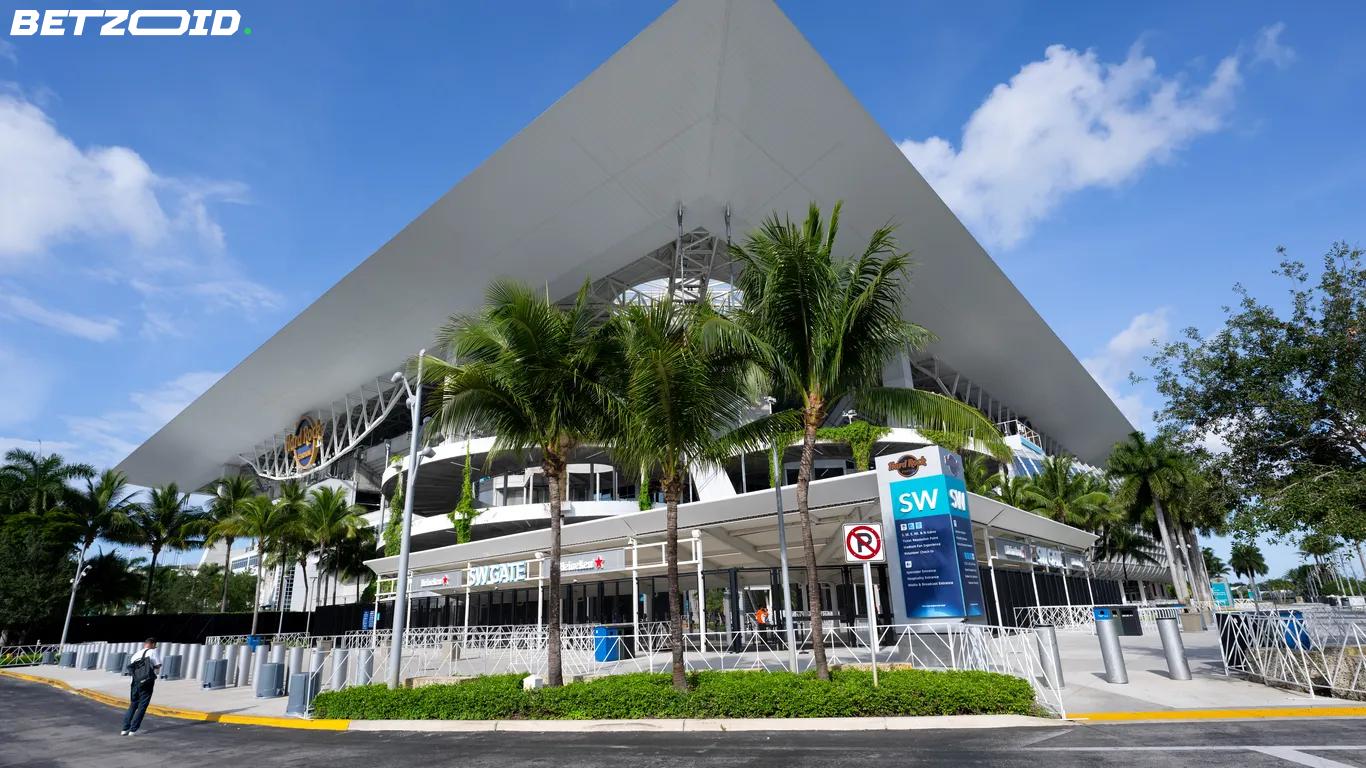
Want to drive to a World Cup match in Miami? That'll be $250. For parking.
FIFA confirmed this week that single parking passes at Hard Rock Stadium will range from $175 to $250 — and they must be bought in advance, because on-site parking on match days simply won't exist. Miss the window, and you're figuring something else out in real time.
FIFA's justification won't satisfy many fans
The governing body says prices are "determined based on local market conditions and benchmarking against comparable major events previously held in each host city." In other words: other events charged a lot here, so we will too.
They also noted that parking revenue will be reinvested in the sport — without specifying how, where, or when. That kind of answer tends to raise more questions than it answers.
To their credit, the comparison to secondary market parking at January's College Football Championship isn't entirely unfair. Passes there hit nearly $400 face-value and approached $700 on resale. FIFA's prices, while steep, aren't historically out of pocket for a stadium event of this scale in South Florida.
Still, the optics of charging $250 to park at a tournament that generated $7.7 billion in revenue at its last edition are difficult to defend with a straight face.
The free shuttle option is actually worth considering
Miami-Dade County is running free shuttles for ticket holders, and the pickup points are genuinely well-placed:
- Dr. Martin Luther King, Jr. Metrorail Station
- Brightline Aventura
- Golden Glades Intermodal Station
- Seminole Hard Rock Hotel
For anyone traveling from Fort Lauderdale or using Brightline, the shuttle route makes real logistical sense. Skipping the parking fee entirely while avoiding game-day traffic isn't a bad deal — it's actually the smarter play for most fans.
Ticket holders are also limited to one parking space per booking, so even if you can stomach the price, splitting it among a group isn't an option.
FIFA has drawn criticism over parking costs across multiple U.S. host cities, not just Miami. The pattern is consistent enough at this point that it's clearly a policy, not an oversight.