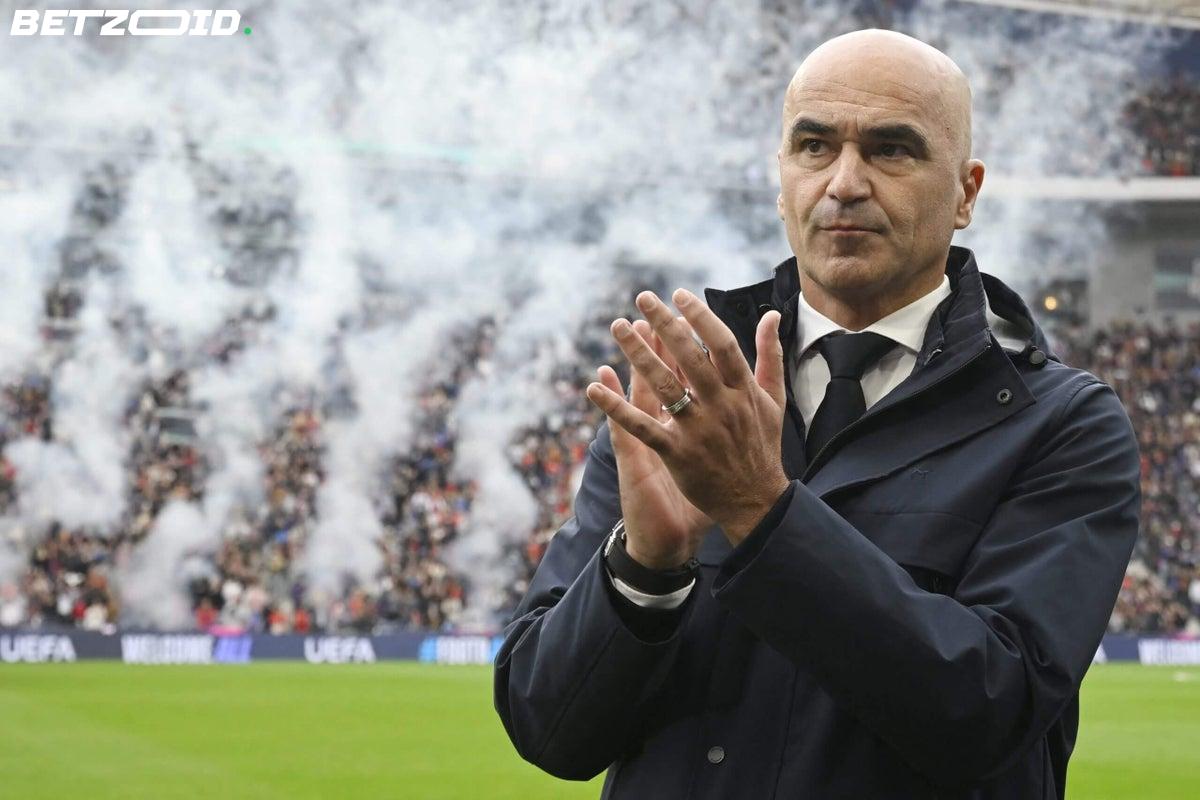
"From now on, you mean nothing. You need to do what the team needs." Roberto Martinez said that to his Portugal players. He meant it. And understanding that line gets you closer to understanding what he's actually building ahead of 2026.
Portugal are in Atlanta this week for a Tuesday friendly against the USMNT — the final fixture of their penultimate World Cup preparation window. The 0-0 draw in Mexico City last weekend came first. But the results aren't really the point. The education is.
Why Portugal are really in the United States
Martinez came to the Club World Cup in the States last summer as an observer. What he saw alarmed him. The travel distances between host cities, the climate swings, the indoor venues, the logistics of keeping a squad settled for seven weeks away from home — he called them "red flags." Not problems he couldn't solve, but problems he needed to experience before he could solve them.
So he built his prep schedule around confronting them directly. Mexico City gave his players altitude. Atlanta's Mercedes-Benz Stadium — with its closed roof and temporary grass pitch — gives them a preview of Houston's NRG Stadium, where Portugal will play their first two group games against either DR Congo or Jamaica and then Uzbekistan. Miami's humidity, which awaits in their third group game against Colombia, gets addressed when they base camp about an hour north of the city during the tournament itself.
The plan for June: fly into South Florida, train there, fly to Houston the day before each of the first two matches, then fly straight back after the final whistle. Same bed. Same hotel. Same routine. Martinez explicitly referenced Qatar 2022 — "where you had your bed, your hotel, you didn't have to move" — as the model. He's trying to manufacture that stability inside a tournament that, by design, doesn't offer it easily.
He's also giving every player seven days off at the end of their club season before the squad assembles. That's not generosity — it's calculation. "It's incredible, the mental fatigue that you accumulate," he said. And then there's the human reality: "We're talking about managing a player being away from their family for 50 days." Players who normally spend one night away from home for a Champions League match are being asked to leave newborns and families behind for nearly two months. Martinez frames managing that burden as "winning a World Cup." He's probably right.
Three pillars, one message
Martinez laid out the framework he uses to run the Portugal environment: clarity, no "I" in team, and constant improvement. The first is about not assuming players know their roles — reviewing expectations explicitly, individually, regularly. The third is self-explanatory. But the second is where it gets interesting.
Aligning individual motivations with collective success is harder than it sounds in a squad full of players used to being the main man at their clubs. Martinez's answer is to find out what each player's "why" actually is — not football generically, but specifically — and then connect it to what the team needs. "When the team loses, the purpose of the individual is still there, and they will see a reaction and keep fighting." That's the logic.
He pushed back hard on the idea that managing a dressing room full of egos is a problem. "Ideally you want 11 or 26 egos," he said — with great attitude. The distinction he drew between ego and bad attitude matters: energy without attitude breaks sessions, and those players, he made clear, have no place in the national team regardless of their club form. "You don't pick the best 26 players. You pick the best 26 members that make the best team."
It's worth watching how that philosophy lands in the betting market. Portugal's World Cup odds reflect the quality of their midfield — Bruno Fernandes in the form of his life, Vitinha and João Neves fresh off a Champions League title with PSG — but squad cohesion over a seven-week tournament is where dark horses get found out and favourites quietly unravel. Martinez is aware of that. His entire preparation is structured around it.
Where Ronaldo fits
The most notable absence this week is Cristiano Ronaldo, who is recovering from a hamstring injury suffered at Al Nassr. Martinez says it's minor, expects him back within a week or two, and insists the World Cup is not at risk. Whether you take that at face value probably depends on how closely you've watched the Portuguese federation manage information in previous tournaments.
What isn't in doubt is the hierarchy. "The center forward position belongs to Cristiano and Gonçalo Ramos," Martinez said flatly. Ramos, who replaced Ronaldo at the 2022 World Cup and scored a hat trick, hasn't taken the shirt — he shares it. That's a deliberate political choice as much as a footballing one, and Martinez has been consistent about it.
His description of coaching Ronaldo at 41 says something about his management style more broadly: "Every day, he uses it as an opportunity to be better than yesterday. ... If he won the Champions League, if he won best player in the world the day before, the next day doesn't get affected." Martinez clearly finds that obsessive drive useful, not difficult. The players who drain him, it seems, are the ones with bad attitudes — not the ones who demand excellence from everyone around them.
Portugal's center back depth is the genuine concern heading into summer. Rúben Dias is back in Manchester, and his deputies are light on experience at this level. That's the squad weakness that hasn't been solved by any of this preparation. How it looks come June is a different question.
"It's not the best 26," Martinez said. "It's the best group of 26 that are gonna make the best team." He's had three years to figure out who those 26 are. The tournament will tell us if he got it right.