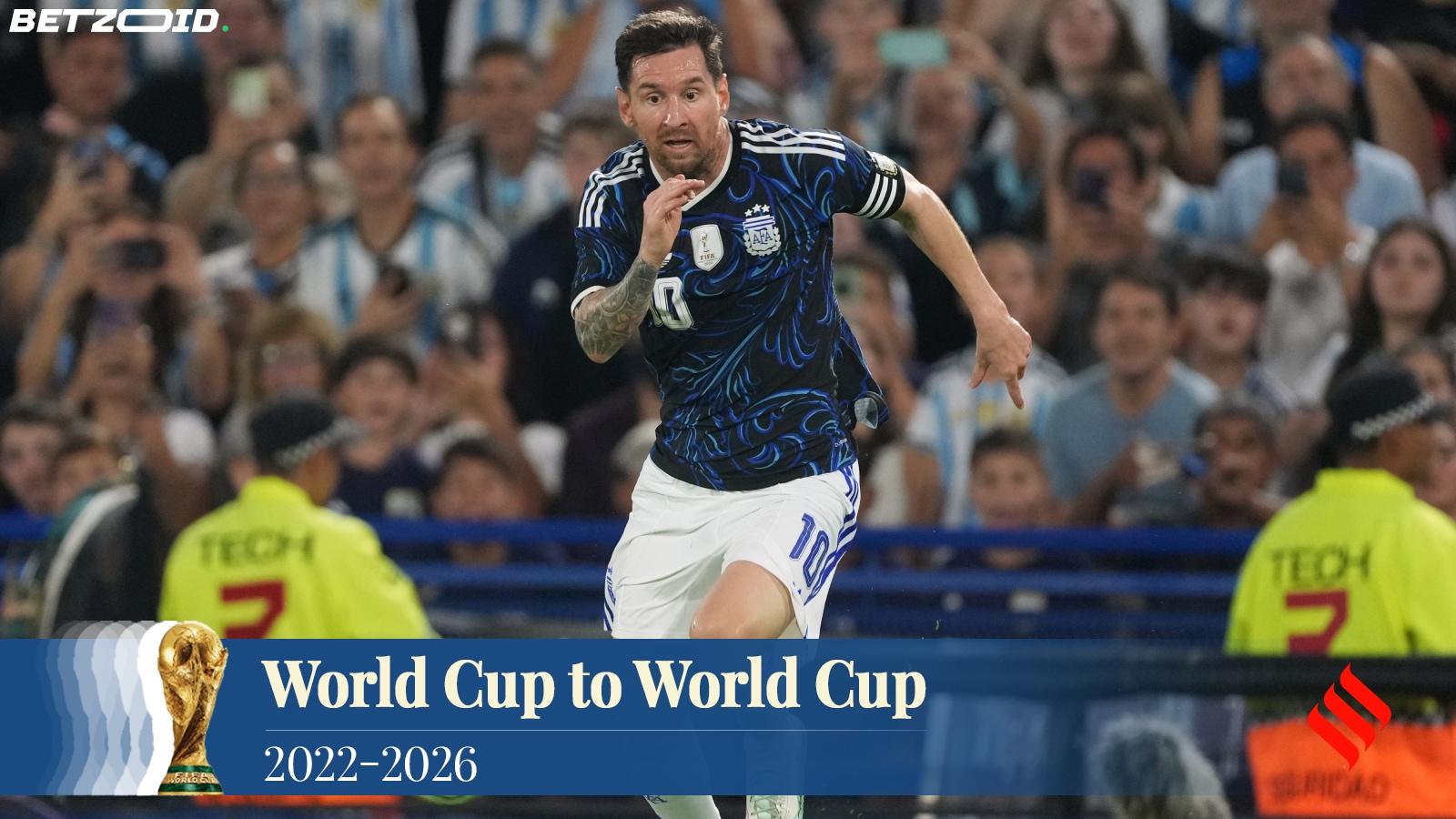
Qatar 2022 was the last frame of a film. Messi, draped in a black bisht, the World Cup in his hands, fireworks overhead and an entire country exhaling decades of grief. The story was complete. The obsession was over. He could have walked away the most decorated footballer alive and nobody would have argued.
He didn't walk away.
In 2026, Messi will turn up at a World Cup sprawled across the United States, Mexico and Canada — at 39 years old, in a league most of the world still doesn't fully take seriously — and somehow he'll still be the centre of the entire conversation. That's not nostalgia. That's something stranger and more interesting.
The MLS move was never just a farewell lap
When Messi joined Inter Miami in 2023, the instinct was to file it under 'graceful exits' alongside Pelé in New York and Beckham in LA. Comfortable. Commercial. Quietly winding down. Except Messi arrived as the reigning world champion, not a fading name chasing a final paycheque.
The effect on MLS was immediate and visible. Stadiums transformed. Celebrities turned up at touchlines. Children in pink shirts — in cities that had barely registered the sport's existence — were screaming his name. FIFA couldn't have drawn it up better if they'd tried: the sport's most recognisable figure planting himself on the continent hosting the next World Cup just as American football culture reached a genuine tipping point.
Whatever happens in 2026, the groundwork is already laid in a way it never was for previous tournaments on this soil.
A different kind of pressure this time
For most of Messi's international career, Argentina's story was organised grief. The 2014 final loss. Back-to-back Copa America defeats. Even his brief retirement in 2016 felt like a man exhausted by carrying a country's emotional weight alone. Every tournament deepened the national neurosis.
Then Lionel Scaloni quietly rebuilt the team from the inside out. Julián Álvarez pressing like someone who has a personal grievance with every defender. Rodrigo de Paul as Messi's protector and emotional amplifier. Enzo Fernández with swagger. Emiliano Martínez with barely contained chaos. Argentina stopped being a shrine to its own history and started functioning like an actual football team.
Messi shifted with it. The player who once tried to dribble through entire midfields started manipulating matches instead — a pause here, a disguised pass there, a glance before a through ball that splits a defence open. At 39, he won't be the most explosive player at the tournament. He might still be the most dangerous one.
The burden of Qatar — every touch carrying the weight of decades — is gone now. The story is complete. What's left in 2026 is closer to freedom than pressure, and that's a genuinely unsettling prospect for anyone trying to stop Argentina.
Sport rarely gives legends a clean ending. Most of them fade out, the final tournament a quiet reminder that time catches everyone. Messi's post-2022 trajectory has refused to follow that script. He's become something harder to categorise than just a great footballer — part player, part national reference point, part symbol of whatever Argentina decided to become after it finally won.
The 2026 World Cup doesn't need Messi to be complete. But football, at its biggest moment, still can't quite picture the stage without him on it.