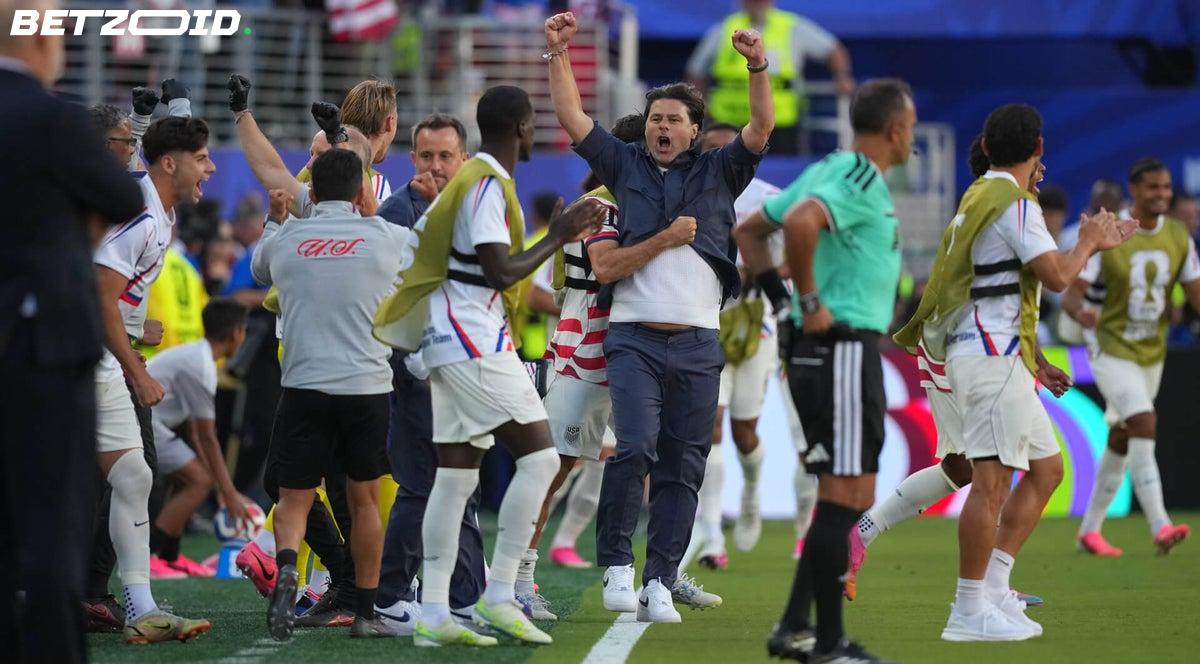
The last four men to get a second stint as USMNT head coach — Arena, Bradley, Klinsmann, Berhalter — all ended the same way: fired, embarrassed, or both. Mauricio Pochettino now steps into that same chair, with a bigger mandate and a worse recent result than any of them had at this stage.
The 4-1 round-of-16 hammering by Belgium in Seattle was the kind of defeat that defines eras. The U.S. had home soil, a captive audience of 50 million viewers, and a "golden generation" that had been building toward this moment for nearly a decade. Belgium exposed every structural flaw in one afternoon. That is the result Pochettino is walking back from.
The second-cycle curse is real
The historical record here is genuinely grim. Bruce Arena made the 2002 quarterfinals, then went winless and finished 25th of 32 in 2006. Bob Bradley was sacked just a year into his second tenure. Klinsmann was dismissed midway through qualifying. Berhalter went out in the Copa América group stage on home soil — again, home soil.
What tripped most of them up wasn't a lack of talent. It was loyalty to the familiar. Leaning on trusted names too long. Missing the next wave while polishing what already existed. Pochettino built his reputation at the World Cup on ruthless selection — no guaranteed spots, no sentiment. He will need every bit of that again, applied even more aggressively.
The September-October window is the first test. Four friendlies, no stakes, no excuses. Young players like Zavier Gozo, Adri Mehmeti, Julian Hall, Peyton Miller, and Neil Pierre should be in that squad. Landon Donovan put it plainly: "By the time you get to 2030, you need these guys to have played 20, 30, 40, 50 games. It can't be like your sixth game." That's not idealism — that's a logistical reality. Qualifying is coming, and it is not gentle.
The core group from the World Cup is ageing into that 2030 cycle awkwardly. Pulisic, McKennie, and Adams will be 31. Antonee Robinson turns 32. The goalkeeper and center-back positions remain genuine question marks. This isn't a squad that can afford four years of incremental tinkering. The rebuild has to start now, in the fall friendlies, not in some distant pre-qualifying camp.
The European question won't go away
Then there is the other issue — the one that polite coverage tends to bury but that any serious analysis of this appointment has to address directly.
Over the 18 months of his first stint, Pochettino gave multiple interviews about his desire to return to the Premier League, said he still felt "in his heart" a desire to go back to Tottenham, called the Premier League "the most competitive league" in the world while working for U.S. Soccer, admitted he most wanted to win the Champions League and the Premier League title — even as the World Cup was four months away — and held talks with AC Milan in May 2026, right before the tournament.
That is not background noise. That is a pattern.
Asked Monday whether he'd tell European clubs no for the next four years, Pochettino was honest in a way that should give U.S. Soccer pause: "In life, nothing is sure. Less in football." He insisted he signed contracts to see them through, and his record at PSG and Chelsea suggests he does mean it when he commits. But the buyout structure and the escalating figures in that clause matter enormously here. A manager who wants to leave will find a way to leave.
If U.S. Soccer finds itself hunting for a head coach in the middle of CONCACAF qualifying, it could unravel everything. The federation has been through that chaos before — it's what turned the 2018 qualifying campaign into a disaster that no one could salvage.
Pochettino can be the right coach for this. He restored competitive standards, cut through the entitlement culture, and made players believe the program was serious. That foundation is real. But the gap between a round-of-16 exit and the quarterfinal the U.S. needed to reach is still sitting there, unaddressed — and the coaches who failed to close that kind of gap in their second cycles all had reasons why this time would be different, too.