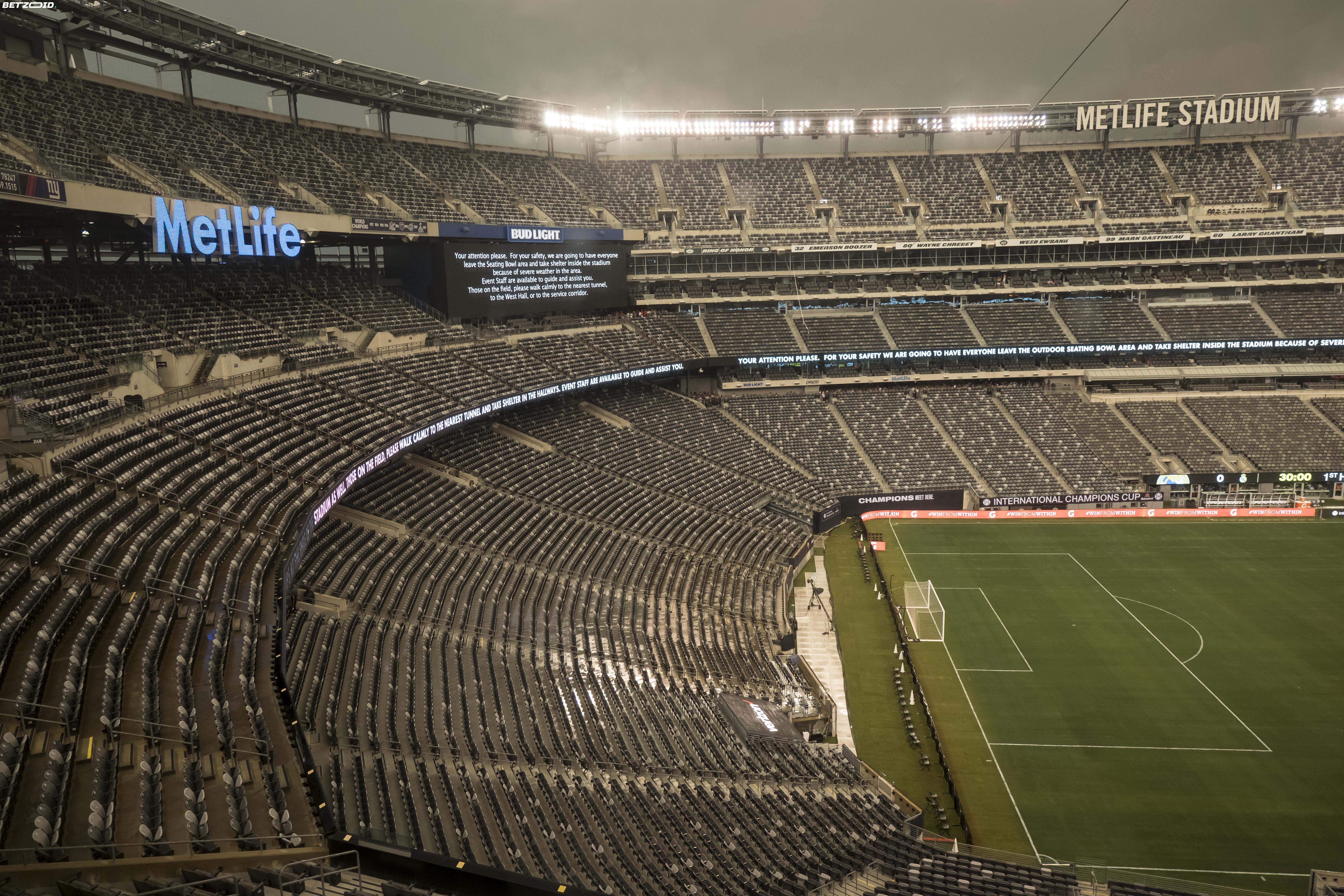
Lightning doesn't care about group stage drama. If a storm rolls in close enough to a stadium, the 2026 World Cup stops — full stop — and everyone from Kylian Mbappé to the guy in row Z of the upper deck has to clear out.
No World Cup matches have been delayed by weather yet, but with the tournament spread across open-air stadiums in the U.S. summer, it's a question of when, not if. The Norway vs. Senegal match at MetLife Stadium on June 22 already has possible lightning in the forecast.
The 30-minute rule
Here's how it works. If lightning strikes within a set radius of the stadium — typically eight or ten miles, depending on the venue and officials on-site — a mandatory 30-minute delay kicks in. If another strike is detected during that window, the clock resets. Entirely. Which means a storm that keeps flickering could theoretically push a delay well past an hour.
When asked to clarify its specific protocols, FIFA kept it deliberately vague, confirming only that it follows "public safety standards" with "dedicated meteorological support" throughout the tournament. No exact distances. No hard timelines beyond what's standard practice across U.S. sports.
What is clear: when the delay is triggered at an open-air venue, the pitch and the stands are both evacuated. Players go to the dressing rooms. Fans leave their seats and shelter in the concourse. Nobody plays the hero in a thunderstorm.
Why this matters more in the U.S. than anywhere else
European football fans aren't used to this. Storms that appear with almost no warning, dump rain and lightning for 45 minutes, then disappear — that's a genuine feature of summer weather in the American south and northeast. Most of Europe's major stadiums were built for colder, grayer climates where lightning delays are essentially unheard of.
The Club World Cup last summer gave a preview of what's possible. Chelsea vs. Benfica in Charlotte was halted for nearly 90 minutes due to lightning. It sparked a real debate about player welfare, scheduling, and whether American summers are a sensible backdrop for elite football. That debate hasn't gone away — it's just been temporarily overshadowed by the World Cup's opening week.
- Lightning within 8-10 miles of a venue triggers a mandatory 30-minute delay
- Any additional strike during the delay resets the 30-minute timer
- Players return to dressing rooms; fans must shelter in stadium concourses
- No 2026 World Cup matches have been weather-delayed yet
- Norway vs. Senegal at MetLife Stadium (June 22) faces possible storm risk
Match odds and in-play markets could be heavily disrupted if delays become a pattern. A 90-minute stoppage changes momentum, muscle temperature, and tactical rhythm — none of which the pre-match lines account for. The Chelsea-Benfica game was proof of that.
The storm system doesn't care who's the favorite.