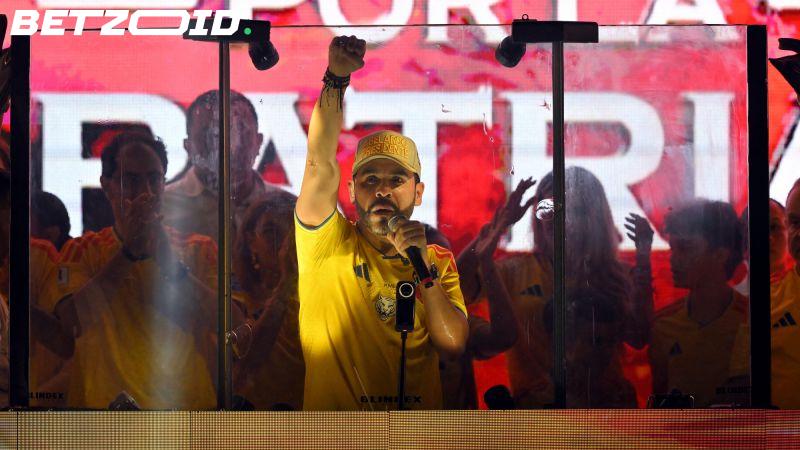
A Colombian judge has legally barred right-wing presidential frontrunner Abelardo de la Espriella from wearing the national team's yellow jersey in political contexts — and he's already said he'll ignore the ruling.
Judge Aura Forero in Bogotá ruled on Thursday that de la Espriella's use of the camiseta was "improper," arguing it tilted a national symbol in favour of one candidacy and denied his opponent Ivan Cepeda equal access to the same imagery. The timing couldn't be more loaded: Colombia's presidential runoff lands on June 21, squeezed between World Cup matches against Uzbekistan and Congo as Los Cafeteros return to the tournament for the first time since 2018.
When the jersey becomes a political prop
De la Espriella had been wearing the jersey at rallies for weeks. Before the first round on May 31, he went a step further — asking voters to show up to polling stations in the shirt, a deliberate workaround of rules banning electioneering on election day. Ten million Colombians voted for him in that first round, so the scale of a potential jersey-clad mobilisation on June 21 is not small.
His conservative nationalist platform carries distinctly MAGA-flavoured rhetoric, and the jersey fits neatly into that framing — framing the football shirt as a patriotic symbol alongside the flag and the armed forces. Critics including Cepeda have pushed back hard, arguing the jersey belongs to all Colombians, not one campaign.
De la Espriella has called the ban an attack on personal freedoms. His supporters have already organised a so-called "flag-day" for Saturday, urging people to wear the shirt en masse.
Latin America's long love affair with the football jersey
This isn't a uniquely Colombian phenomenon. Jair Bolsonaro turned Brazil's green and yellow into a right-wing rallying symbol so effectively that it became genuinely divisive. Lula countered not with the jersey but with proximity to stars like Ronaldo Fenômeno. Even in Venezuela — the only South American country never to qualify for the men's World Cup — the Vinotinto shirt has been weaponised by both Maduro and his opponents.
Football jerseys are the most accessible populist prop in Latin America. Nothing signals "man of the people" more cheaply or effectively than the shirt 40 million fans already own.
With Colombia set to play at the World Cup and the runoff vote falling in between fixtures, authorities face a practical impossibility: 10 million de la Espriella voters, a World Cup buzz sweeping the country, and a judge's ruling that nobody has any real mechanism to enforce.