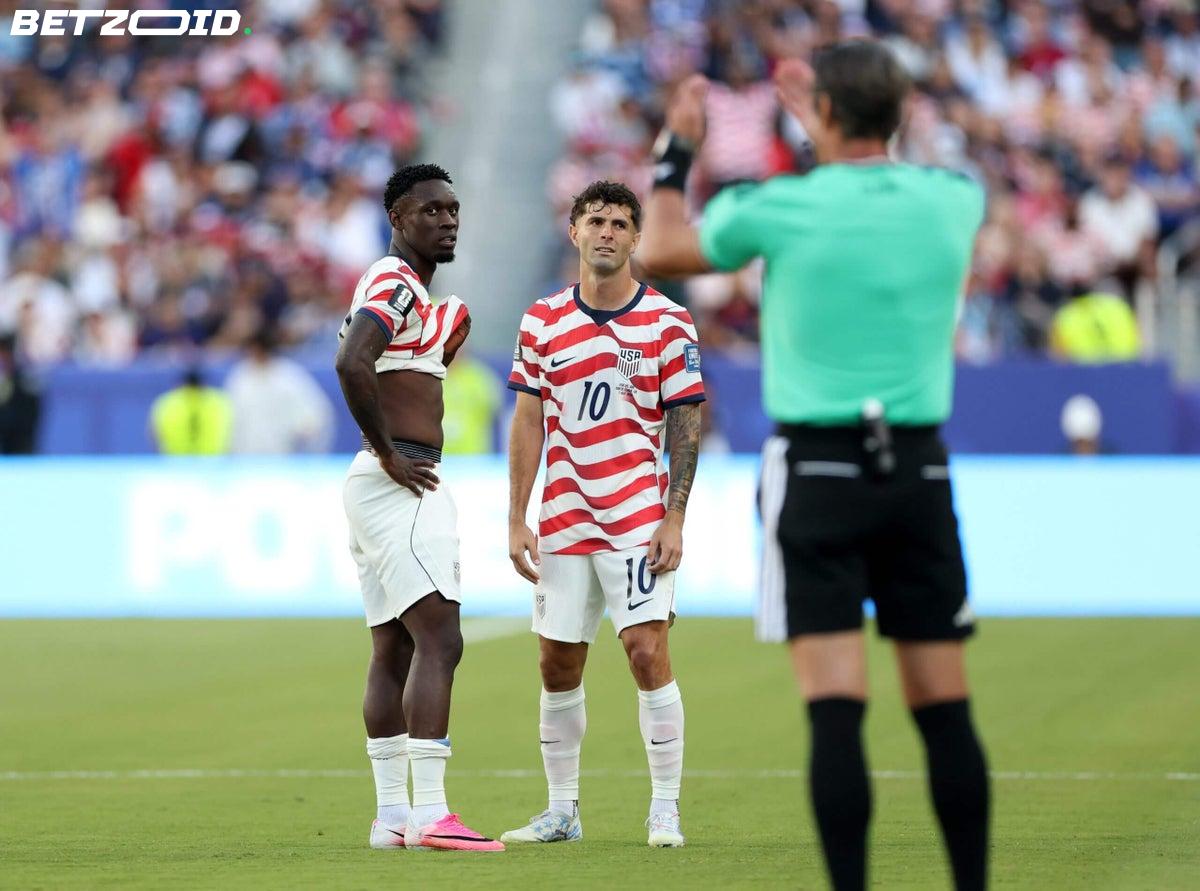
"When you get this type of situation, it opens up space for people to say 'ah ha, this sort of thing happens all the time'." Howard Webb said it plainly, and he's not wrong. FIFA's decision to overturn Folarin Balogun's one-game suspension — following a phone call between Donald Trump and Gianni Infantino — has done more damage to football's officiating ecosystem than the red card itself ever could have.
Webb, the chief refereeing officer for Pro Ref and a former world-class referee himself, was speaking at a Premier League season-launch event in London on Wednesday. His concern isn't really about Balogun or the tackle on Tarik Muharemovic — clumsy, not malicious, take your pick. His concern is structural. The precedent FIFA just set is corrosive.
A Process That 'Seemingly Didn't Exist Before'
Webb laid it out precisely: a red card was shown, a politician publicly applied pressure on FIFA, and a suspension was then lifted through what Webb described as a process that "seemingly didn't exist before." FIFA insists Trump's call had no bearing on the disciplinary committee's ruling. Trump, naturally, claimed full credit. That contradiction is the problem. You can't have both be true, and everyone watching knows it.
The match officials Webb oversees in the English professional game already operate in an environment where social media treats every marginal decision as evidence of a fix. His words on that are worth sitting with: "Far too often now, decisions are viewed as correct or corrupt by people on social media who try to draw inferences around decisions they don't agree with. They question the motivation of that decision, with no facts or evidence."
That was already the reality before this World Cup saga. Now there's a documented instance — admitted, on record — of political pressure being placed on the sport's governing body around a disciplinary decision. Whether it actually changed the outcome is almost beside the point. The perception is set.
Belgium's 4-1 Win Didn't Close the Book
There's a temptation to say Belgium's 4-1 demolition of the USMNT in the round of 16 rendered the whole episode moot. Justice served, move on. But the damage to officiating credibility doesn't expire just because the team that benefited from the reversal lost anyway.
Premier League chief executive Richard Masters put it well: the World Cup conversation should be about Spain's dominance and England's semi-final anguish. Instead, it's about governance failures and phone calls to Infantino. Masters also raised a fair structural point — most major leagues now have red card review processes that can actually overturn a decision if it's clearly wrong. FIFA doesn't. Their system only addresses the length of a suspension, not the validity of the card. That gap is what created the vacuum that got filled by politics.
- Balogun's red card came in the round-of-32 win over Bosnia and Herzegovina on July 1
- FIFA overturned his suspension ahead of the round-of-16 clash against Belgium on July 6
- Belgium won that match 4-1
- Trump publicly claimed credit for the reversal; FIFA denied political interference
Webb's final point lands hardest: "That's the thing that affects the 90 minutes, the game. The fact that that influence can be had. That's just really not reflective of the game I know."
The game he knows. The game a lot of people thought they knew. That's what's actually on the table here.