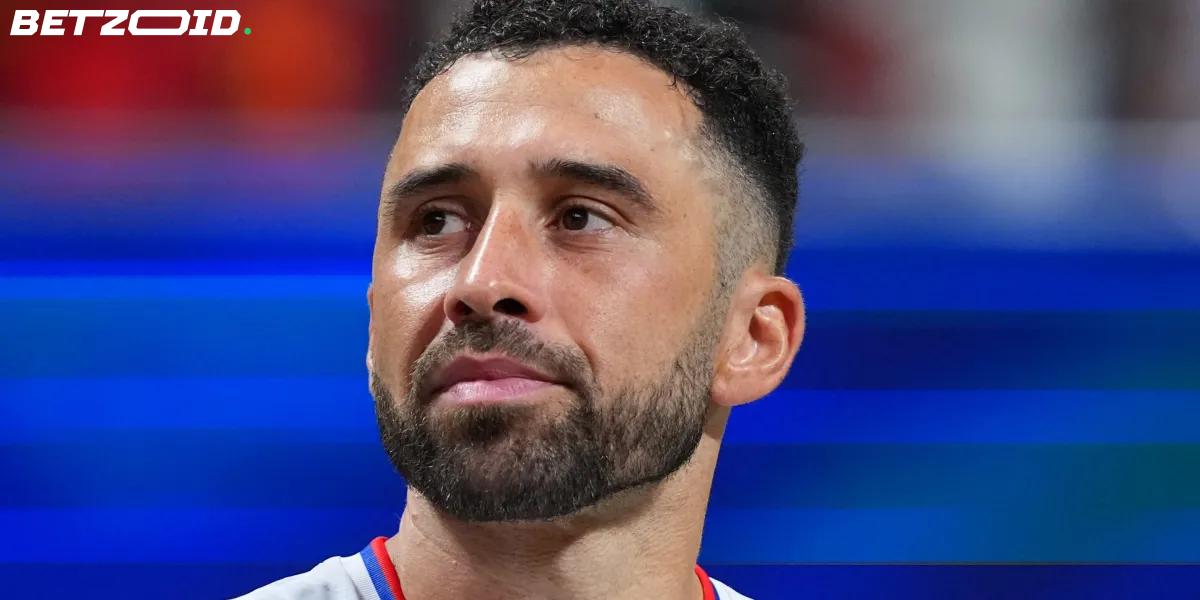
"I copied the message and put it into Google Translate" — that's how Roberto Lopes found out he was being recruited for international football. In 2018, Cape Verde coach Rui Aguas sent him a message on LinkedIn. Lopes, working a desk job at a Dublin bank and playing part-time for Shamrock Rovers, assumed it was junk and ignored it.
Nine months later, Aguas tried again. This time in English. This time Lopes paid attention.
Three weeks after that, he was on a plane to make his international debut against Togo.
From Shamrock Rovers to Spain
Lopes was born to an Irish mother and a Cape Verdean father, which made him eligible for the West African island nation — he just didn't know anyone was looking. Once he understood what was on the table, the answer was immediate: "Yep, 100% I'd love to be a part of the squad."
What followed wasn't a short-term experiment, even if he initially framed it that way. Over seven years, Lopes became a fixture in a side that has quietly become one of the more compelling stories at the 2026 World Cup. Last week, Cape Verde — ranked 64th in the world — held Spain, the third-ranked team on the planet, to a 0-0 draw in their first-ever World Cup appearance. That result alone signals this isn't a group-stage footnote. Cape Verde's odds of advancing from a group containing Uruguay and Saudi Arabia just got a lot more interesting.
Lopes is clear-eyed about what leaving the bank actually meant at the time: "It was risky because I was in a solid job. Where our league was at that moment, there wasn't much security in terms of a career in football." The gamble paid off in ways he couldn't have mapped. Brand partnerships. A professional career. A World Cup.
Cape Verde's schedule from here
The draw against Spain gives them a platform. What they do with it depends on performances against Uruguay on June 21 and Saudi Arabia on June 26 — two winnable games on paper, two games that could define whether this is a debut to remember or just a very good opening night.
As for Lopes: "We've achieved what we wanted to achieve, but we still want more as well."
A LinkedIn recruiter who didn't give up. A bank worker who took the call. And a country at its first World Cup, having just kept Spain off the scoresheet. The story writes itself.