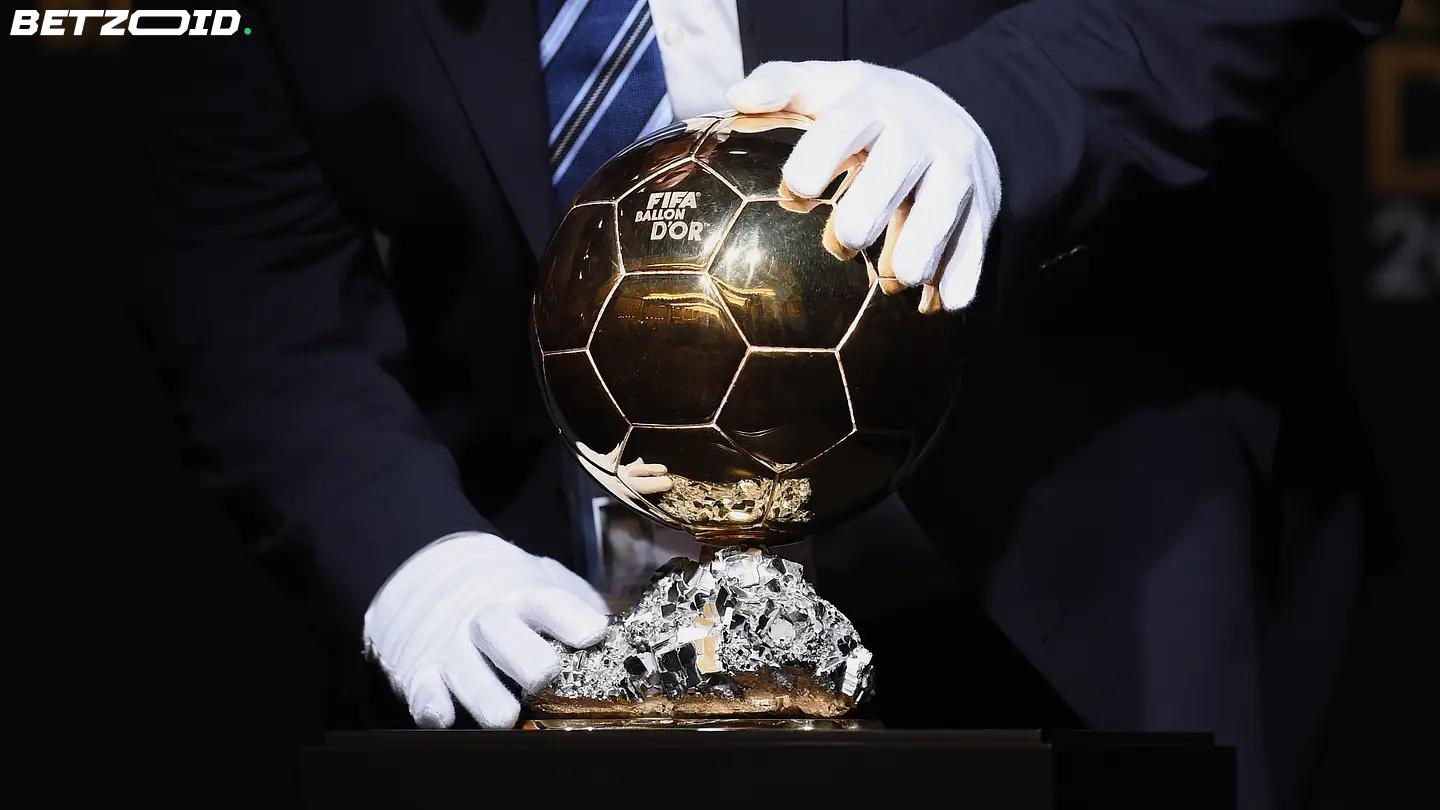
The Ballon d'Or has never been decided unanimously. Not once. And given its history of baffling omissions, extended deadlines, and full club boycotts, that might be the least surprising thing about it.
What Gabriel Hanot and Jacques Ferran dreamed up in the mid-1950s — a journalists' vote for Europe's best player — has mutated into the single most important individual prize in global football. FIFA's Best Awards exist. Nobody really cares. The golden ball is what players lose sleep over.
Here are the ten times it went most spectacularly wrong.
The controversies that defined the award
10. Non-Europeans locked out for four decades. The award started as a European-only prize, which had a loose logic to it in the pre-broadcast era. That logic collapsed the moment South Americans and Africans began dominating European football — and still couldn't be considered. Pelé never won one. Neither did Maradona, Mario Kempes, or Romário. Argentine-born Di Stéfano and Sívori did, via dual citizenship. The rules were conveniently flexible depending on who was asking.
9. Keegan wins back-to-back while Dalglish scores 31 goals. Kevin Keegan retaining the trophy in 1979 isn't the strange part. His first win in 1978 is. He'd just moved to Hamburg, hadn't found his feet, won nothing at club level, and England hadn't even qualified for the World Cup. Meanwhile, Kenny Dalglish — his direct replacement at Liverpool — scored 31 goals including the winner in the European Cup final and finished eighth. Eighth.
8. Haaland scores 52 goals in 53 games. Messi wins anyway. Erling Haaland's debut season at Manchester City produced 52 goals, 53 appearances, and a historic treble. Voters still gave Messi his eighth award — by some margin — on the back of his World Cup win with Argentina. The World Cup argument is legitimate. But the gap in voting wasn't close enough to suggest it was even a debate.
7. Sneijder wins a treble. Finishes fourth. The 2010 award went to Messi, partly because Spain's World Cup winners Iniesta and Xavi split the anti-Messi vote. Strange enough. Stranger still: Wesley Sneijder, who won a treble with Mourinho's Inter and reached the World Cup final with the Netherlands, finished fourth with 14.5% of the vote. Diego Milito — Serie A's best player and scorer of two goals in the Champions League final — wasn't even nominated.
6. Owen beats Raúl. Spain loses its mind. Michael Owen's 2001 wasn't bad. A Liverpool treble, a hat-trick against Germany in a World Cup qualifier at 21. Fine season. Raúl's 2001 was better by most measures — La Liga's best player and top scorer with Real Madrid. Spanish press went with "Stolen Ballon d'Or." Still gets brought up in Madrid to this day.
5. Henry scores 20 goals and 20 assists. Comes second. Pavel Nedvěd won the 2003 award after a strong Juventus year. He deserved to be in the conversation. But Thierry Henry had just become the first player in Premier League history to hit 20+ goals and 20+ assists in a single season. He finished second. Paolo Maldini, one of the greatest defenders ever, was third. Without social media to amplify it, the moment passed quietly. It shouldn't have.
4. Puskás scores 47 goals in 36 games. Doesn't win. Luís Suárez — the Spanish midfielder, not the Uruguayan — took the 1960 award after a solid Barcelona season. That same year, Ferenc Puskás scored 47 goals in 36 games for Real Madrid, including four in the European Cup final. He finished second. He never won the award. That sentence shouldn't be possible.
The three that still sting the most
3. Real Madrid boycott the ceremony. When Rodri won the 2024 Ballon d'Or ahead of Vinícius Jr, Real Madrid didn't just complain — they refused to attend the Paris ceremony entirely. The club's statement was something: "It is clear that Ballon d'Or-UEFA does not respect Real Madrid. And Real Madrid does not go where it is not respected." Rodri had been the engine of Spain's Euro 2024 triumph, which is a credible case. But the boycott transformed a debatable result into a full diplomatic incident.
2. France Football extends the deadline. Ronaldo benefits. In 2013, Cristiano Ronaldo scored 55 goals in 55 games — a genuine case on its own. But France Football extended the voting deadline to include the World Cup playoffs, during which Ronaldo scored four goals against Sweden. In a tight three-way race with Messi and Franck Ribéry — who had just won a Bayern treble — those extra votes likely made the difference. Ronaldo remains the last winner without a club trophy in his winning year. The rulebook bent in his favour at exactly the right moment.
1. COVID cancels the award. Lewandowski pays the price. In 2020, France Football cancelled the Ballon d'Or entirely due to the pandemic. Robert Lewandowski had just posted one of the greatest single-season scoring records in European football history as part of Bayern's treble-winning campaign. He was the clear favourite. He never got to find out.
He came back the following year and scored 41 goals in 29 Bundesliga games, shattering Gerd Müller's long-standing record in the process. Voters gave it to Messi for his Copa América win instead.
Lewandowski has never won a Ballon d'Or. That's the number that defines the award's credibility problem more than any other.