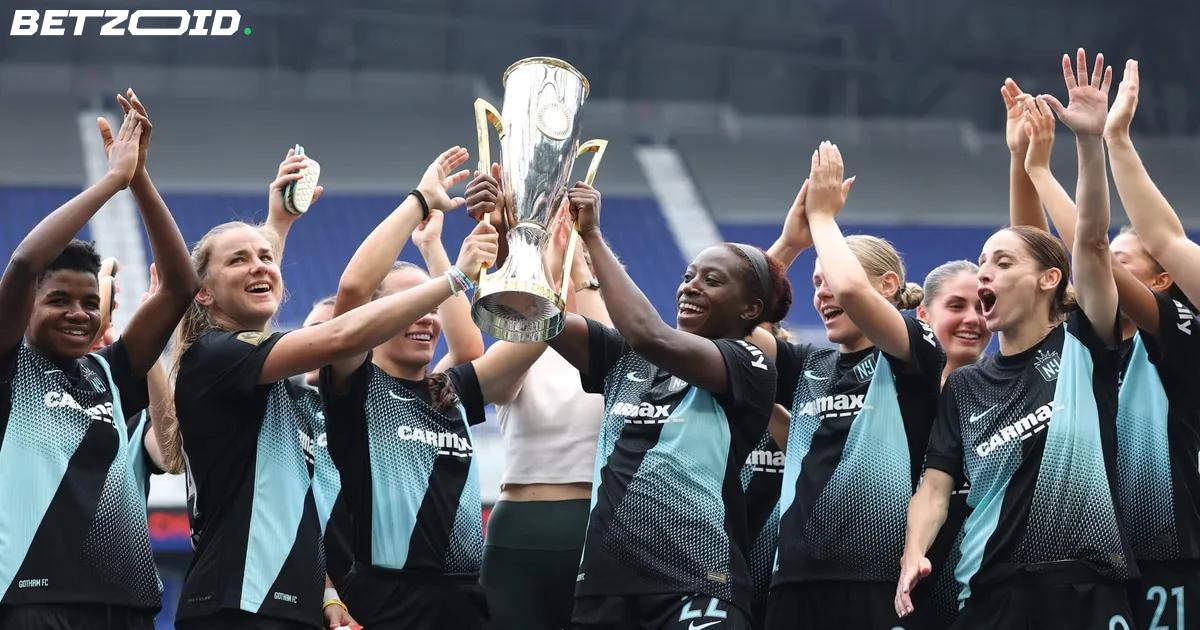
FIFA has confirmed the United States will host the inaugural Women's Club World Cup from January 5-30, 2028 — slap in the middle of the European domestic season, which is exactly as complicated as it sounds.
Seven of the 19 spots are already filled. Arsenal and Barcelona represent European football's elite. Gotham FC carry the NWSL banner. They're joined by Corinthians (Brazil), Wuhan Jiangda WFC (China), Club America (Mexico), and Naegohyang of North Korea. Four more UEFA clubs will follow, along with three each from the AFC, CAF, and CONMEBOL, plus one OFC representative.
The scheduling problem nobody has solved
The WSL called the January window potentially "catastrophic" for its competition. That's not panic — that's a legitimate operational concern. Pulling clubs out of their domestic season mid-run, with European title races tight by that point, creates serious disruption that FIFA has essentially decided to absorb on everyone else's behalf.
NWSL Commissioner Jessica Berman put it plainly: teams from her league will be in their off-season, coming off a break, competing against European sides who've been playing competitive football for months. "Inherently an uneven playing field," she said. Hard to argue with that.
The tournament was originally planned for this year before stakeholders pushed back, asking for more time to get it right. Whether 2028 is "right" is a different debate — because that year is now stacked. The Women's World Cup runs in Brazil from June 24 to July 25, 2027, and six months later this kicks off. Then the Olympic Games follow in the US from July 14-30, 2028. It's a women's football calendar that's less a schedule and more a stress test.
What it means beyond the headlines
For Arsenal and Gotham specifically, this is both reward and logistical puzzle. Arsenal will need to manage a squad across a WSL season and a global club tournament simultaneously. Their squad depth — and injury record come winter — suddenly matters a lot more than it did last season.
Barcelona, as reigning European champions, arrive as favorites regardless of scheduling quirks. Their recent dominance in the women's game has been built on a system that travels. They'll be tough to bet against.
Each participating nation for the 2027 Women's World Cup will receive $2.5 million in preparation funds before December 2026 — matching what men's teams got for this year's edition. That parity in preparation funding is a genuine step forward, even if the calendar chaos around it tells a more complicated story.
Dame Sarai Bareman, FIFA's chief women's football officer, called it a "benchmark" for the future of women's football. Whether that benchmark holds up against the scheduling reality of January 2028 is the question every club director is quietly asking right now.